★☆☆☆☆ Difficulty
At a Glance
| Time to Harvest | 21-35 days |
|---|---|
| Sun | Full sun |
| Water | Consistent moisture prevents tough, spicy roots |
| Good For | Containers ✓ Raised Beds ✓ In-Ground Gardens ✓ |
Quick Reference
| Sun | Full sun |
|---|---|
| Spacing | 1-2 inches apart (standard); more for daikon types |
| Planting Depth | 1/2 inch |
| Days to Harvest | 21-35 days, among the fastest vegetables in the garden |
| Watering | Consistent moisture; drought causes tough, overly spicy roots |
| Soil pH | 6.0-7.0 |
| USDA Zones | Grown as an annual in zones 1-11 |
| Average Yield | 1 root per plant, dozens per short row |
Before You Plant…
Growing radishes is nearly foolproof if you follow three simple rules:
- Loosen the soil first. Compacted or rocky soil produces stunted, misshapen roots.
- Keep watering steady. Uneven moisture causes roots to crack or split.
- Harvest promptly. Radishes left too long turn woody and overly hot in flavor.
Growing Timeline
| Week | What You’ll See |
|---|---|
| 1 | Seeds germinate quickly. |
| 2 | True leaves appear. |
| 3 | Roots begin swelling underground. |
| 3-5 | Roots reach harvestable size. |
Timing for growing radishes varies by variety, with daikon types taking longer than standard round radishes.
How to Plant Radishes
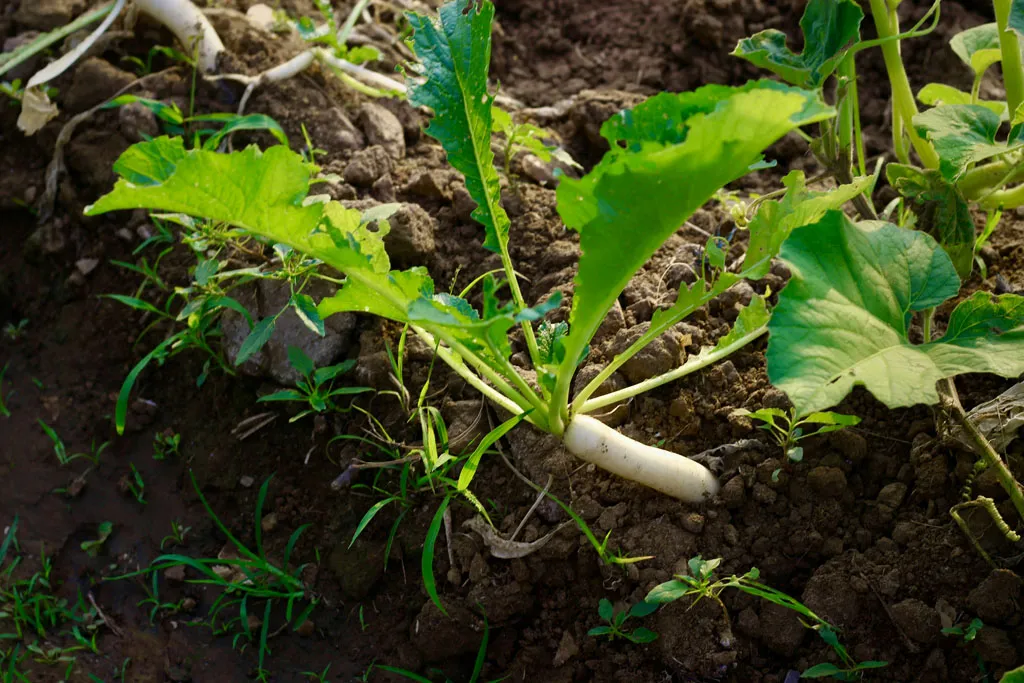
Loosen soil before planting at least six inches deep, a foot or more for long daikon types. Plant seeds from April through early May, and again in August for a fall crop. Radishes don’t tolerate transplanting, so always direct seed.
Best Planting Time
Growing radishes successfully starts with picking the right window for your zone:
| USDA Zone | Best Planting Time |
|---|---|
| 1 | Sow in June once soil has thawed and can be worked. |
| 2 | Sow in late May through June. |
| 3 | Sow April through early May, and again in August. |
| 4 | Sow April through early May, and again in August. |
| 5 | Sow April through early May, and again in August. |
| 6 | Sow March through April, and again in late summer. |
| 7 | Sow March through April, and again in late summer. |
| 8 | Sow February through March, and September through October. |
| 9 | Sow February through March, and September through October. |
| 10 | Grow fall through early spring, avoiding summer heat. |
| 11 | Grow fall through early spring, avoiding summer heat. |
Local frost dates matter less than soil temperature for radishes, since they germinate reliably in cool soil.
How to Care for Radishes
Growing radishes well starts with well-drained, slightly acidic to neutral soil with pH 6 to 7, as long as it isn’t compacted. Improve heavy or stony soil with well-rotted manure or compost, and avoid fresh manure, which can stimulate excessive root branching.
The University of Minnesota Extension offers detailed guidance on soil prep for smooth, uniform roots.
Preventing Cracked or Split Roots
Uneven moisture is the most common cause of cracking as radishes grow. Keep watering consistent rather than letting soil swing between dry and wet, especially as roots near harvest size.
Companion Planting
Carrots, lettuce, and cucumbers pair well when growing radishes, since fast-germinating radish seeds can mark rows and break up soil crust for slower crops planted alongside them. Avoid dense plantings near hyssop, which can inhibit radish growth.
Can You Grow Radishes in Containers?
Yes. Standard radishes do well in containers as shallow as 6-8 inches deep, while daikon types need 12 inches or more. Radishes are one of the fastest, most reliable crops for container gardening.
Harvesting
Harvest garden radishes three to five weeks after planting, once roots reach a usable size. For daikon, spade underneath the planting to lift long roots without breaking them, since pulling can snap the taproot.
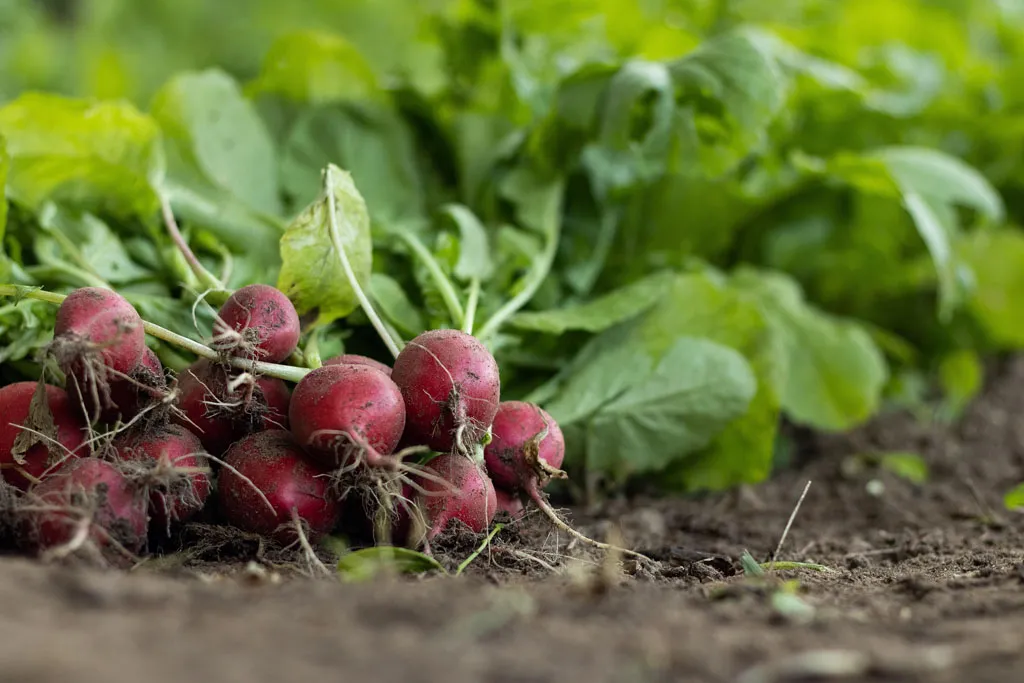
Garden radishes keep about one to two weeks in the refrigerator, though they lose moisture and become shriveled fairly quickly. Remove tops before storing to help roots last longer.
Why Grow Radishes?
Growing radishes is one of the fastest ways to get real food out of a garden, often ready in under a month. They’re low in calories, provide vitamin C and fiber, and their quick germination makes them a great confidence-builder for beginner gardeners and kids alike.
Common Problems
Flea beetles and root maggots |
Cracked or split roots |
Overly hot or woody flavor
Flea Beetles and Root Maggots: Flea beetles chew small holes in leaves, especially on young plants. Cabbage maggots and wireworms can tunnel into roots. Row covers help protect young seedlings.
Cracked or Split Roots: Uneven moisture is the main cause. Water consistently rather than letting soil dry out between waterings.
Overly Hot or Woody Flavor: This usually means radishes were left in the ground too long, or grew under drought stress. Harvest promptly once roots reach a usable size.
Common Beginner Mistakes
These mistakes come up again and again when growing radishes for the first time:
- Planting in compacted or rocky soil without loosening it first.
- Letting soil dry out between waterings.
- Leaving roots in the ground too long, resulting in woody texture.
- Overcrowding seeds, which produces small, misshapen roots.
FAQs
Q: Why are my radishes all leaves and no root?
A: This is often due to overcrowding or too much nitrogen; thin seedlings and use balanced fertilizer.
Q: Can radishes be grown in containers?
A: Yes, standard radishes do well in containers as shallow as 6-8 inches deep.
Q: Why do my radishes taste so spicy?
A: Heat and drought stress intensify flavor; consistent watering and prompt harvest keep radishes milder.
Q: How long do radishes take to grow?
A: Most standard varieties are ready in 21-35 days from seed.
Q: Can I grow daikon radishes the same way?
A: Mostly, though daikon needs deeper, looser soil and more space to develop long, straight roots.
Best Varieties for Beginners
Choosing the right variety makes growing radishes even easier:
Best beginner variety: Cherry Belle, a fast, reliable round red radish.
Best for containers: French Breakfast, compact and quick-maturing.
Best for storage: Daikon, a long-storing Asian type.
Best mild flavor: Watermelon Radish, with striking pink-and-green flesh.
Related Vegetables
If you’re planning a fast-growing spring bed, check out our guides to growing carrots and growing lettuce.