★★★☆☆ Difficulty
At a Glance
| Time to Harvest | 65-85 days after transplanting |
|---|---|
| Sun | Full sun |
| Water | Keep soil evenly moist |
| Good For | Containers ✓ Raised Beds ✓ In-Ground Gardens ✓ |
Quick Reference
| Sun | Full sun (6-8 hours per day) |
|---|---|
| Spacing | 18-24 inches apart |
| Planting Depth | Transplant at same depth as pot |
| Days to Harvest | 65-85 days after transplanting |
| Watering | Consistent moisture; avoid drought stress |
| Soil pH | 5.5-7.5 |
| USDA Zones | Zones 4-11 outdoors; zones 1-3 need a greenhouse or high tunnel |
| Average Yield | 4-6 fruits per plant |
Before You Plant…
Growing eggplant successfully depends on warmth more than almost anything else:
- Wait for consistently warm nights. Overnight lows below 50°F stunt growth permanently.
- Use black plastic mulch if possible. It warms the soil and reduces root stress.
- Harvest with shears, not by pulling. Twisting damages both fruit and plant.
Growing Timeline
| Week | What You’ll See |
|---|---|
| 1-2 | Seeds germinate indoors. |
| 8 | Transplant outdoors once nights stay reliably above 50°F. |
| 10-12 | Flowering begins. |
| 15-20 | First fruit is ready to harvest. |
Timing for growing eggplant varies by variety, weather, and how warm your growing season is.
How to Plant Eggplant
Start seeds indoors 8-10 weeks before your last frost date, transplanting only after overnight low temperatures are consistently above 50°F. Transplant in late afternoon or on a cloudy, calm day, spacing plants 18-24 inches apart.
Best Planting Time
Growing eggplant successfully starts with picking the right window for your zone:
| USDA Zone | Best Planting Time |
|---|---|
| 1 | Best grown in a greenhouse or high tunnel; outdoor season is too short for reliable fruiting. |
| 2 | Best grown in a greenhouse, or with row cover protection outdoors starting mid-June. |
| 3 | Start indoors in March, transplant early June. |
| 4 | Start indoors in March, transplant early June. |
| 5 | Start indoors in March, transplant late May. |
| 6 | Start indoors in March, transplant mid-to-late May. |
| 7 | Start indoors in March, transplant mid-to-late May. |
| 8 | Start indoors in February, transplant April. |
| 9 | Start indoors in February, transplant April. |
| 10 | Transplant February through April, avoiding the hottest stretch of summer. |
| 11 | Transplant February through April, avoiding the hottest stretch of summer. |
Local frost dates and nighttime temperatures matter more than zone alone. Eggplant will not thrive during a cool season.
How to Care for Eggplant
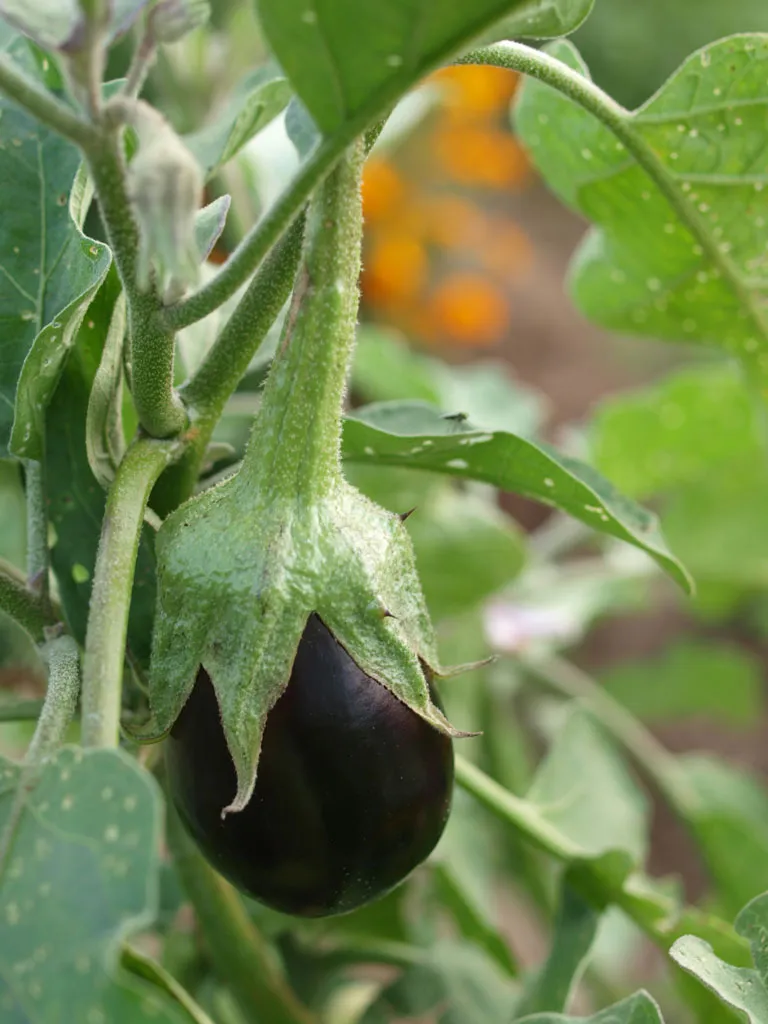
Growing eggplant well starts with a soil pH between 5.5 and 7.5 and full sun. Too much nitrogen fertilization leads to bushy, leafy plants that are slow to bear fruit, so use a low- or no-phosphorus fertilizer unless your soil test says otherwise.
The University of Minnesota Extension offers detailed guidance on variety selection for shorter growing seasons.
Protecting Fruit From Sunburn and Heat Stress
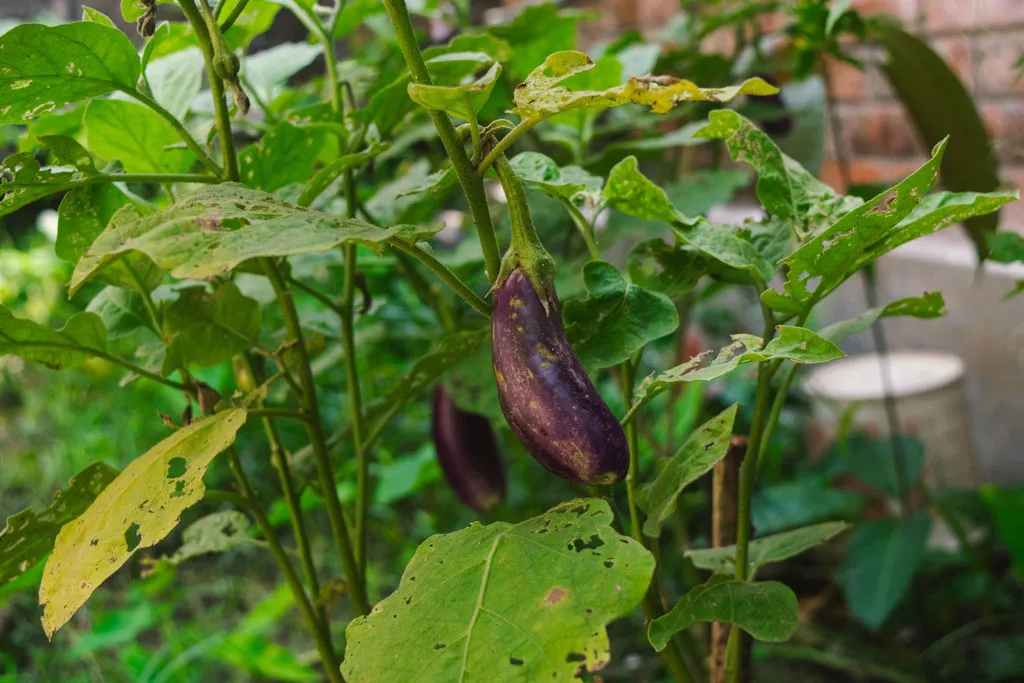
Temperatures above 90°F during the day, or below 60°F or above 70°F at night, can cause poor flowering. Fruit is also vulnerable to sunburn, developing white patches if there isn’t enough leaf coverage to shade it during hot, dry weather. Adequate leaf growth naturally protects developing fruit.
Companion Planting
Beans, marigolds, and thyme are good companions when growing eggplant, helping to deter pests. Avoid planting eggplant where tomatoes or peppers grew recently, since all three are nightshades that share pests and diseases.
Can You Grow Eggplant in Containers?
Yes. Use a container that holds at least 5 gallons, especially for compact varieties. Containers warm up faster than garden soil in spring, which can be an advantage for eggplant’s heat-loving nature.
Harvesting
Harvest eggplants when they’ve reached mature size, clipping them off with sharp shears rather than pulling, which can damage both fruit and plant. Pick while skins are still shiny and firm; don’t let fruit hang on the plant once mature, since quality declines quickly.
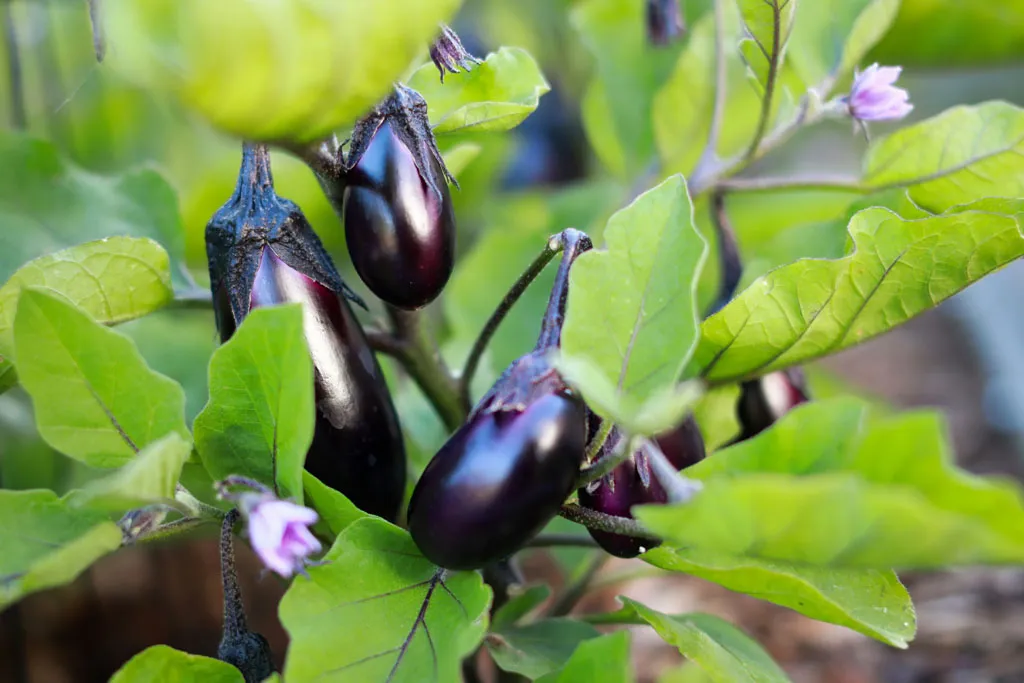
Eggplants keep about one week in the refrigerator, though their skins are sensitive to cold and may become pitted after too long. Blanching and freezing is possible but most gardeners don’t consider it ideal for preservation; pickling or making relish works better.
Why Grow Eggplant?
Growing eggplant brings a versatile, meaty vegetable to the kitchen, prized in dishes from ratatouille to baba ganoush. It provides fiber, potassium, and antioxidants, and its glossy purple fruit adds visual interest to any summer garden.
Common Problems
Poor flowering |
White patches on fruit |
Slow to bear fruit
Poor Flowering: Temperature extremes, either too hot or too cold, cause flowers to drop before fruiting. There’s little to do beyond waiting out extreme weather.
White Patches on Fruit: This is sunburn, caused by insufficient leaf coverage during hot, dry weather. Healthy foliage naturally shades developing fruit.
Slow to Bear Fruit: Too much nitrogen fertilizer produces bushy, leafy plants at the expense of flowering. Switch to a low-nitrogen fertilizer and reduce feeding.
Common Beginner Mistakes
These mistakes come up again and again when growing eggplant for the first time:
- Transplanting too early into cool soil or cold nights.
- Over-fertilizing with nitrogen, producing leaves instead of fruit.
- Pulling fruit by hand instead of cutting with shears.
- Letting mature fruit sit too long on the plant.
FAQs
Q: Why won’t my eggplant flower?
A: Temperature extremes, either too hot or too cold, are the most common cause of poor flowering.
Q: Can eggplant be grown in containers?
A: Yes, a 5-gallon container or larger works well, especially for compact varieties.
Q: Why does my eggplant have white patches?
A: This is sunburn from insufficient leaf coverage during hot weather.
Q: How do I know when to harvest eggplant?
A: Pick when skins are shiny and firm and the fruit has reached mature size; don’t wait too long.
Q: Can eggplant be frozen?
A: Blanched and frozen eggplant is possible but not ideal; pickling or relish preserves quality better.
Best Varieties for Beginners
Choosing the right variety makes growing eggplant easier, especially in shorter seasons:
Best beginner variety: Black Beauty, the classic large, glossy purple type.
Best for short seasons: Fairy Tale, a fast-maturing, compact hybrid.
Best for containers: Patio Baby, bred specifically for pots.
Best unique variety: Rosa Bianca, prized for its mild, creamy flesh.
Related Vegetables
If you’re rounding out a warm-season garden, check out our guides to growing tomatoes and growing bell peppers.