★★☆☆☆ Difficulty
At a Glance
| Time to Harvest | 60-80 days, depending on variety |
|---|---|
| Sun | Full sun |
| Water | Keep soil consistently moist, especially at germination |
| Good For | Containers ✓ Raised Beds ✓ In-Ground Gardens ✓ |
Quick Reference
| Sun | Full sun (6+ hours per day) |
|---|---|
| Spacing | 2-3 inches apart after thinning |
| Planting Depth | 1/4 inch |
| Days to Harvest | 60-80 days, depending on variety and conditions |
| Watering | Gentle, consistent moisture; dry crust disrupts germination |
| Soil pH | 6.0-6.8 |
| USDA Zones | Grown as an annual in zones 1-10 |
| Average Yield | 1 root per plant, several dozen per 10-foot row |
Before You Plant…
Growing carrots successfully comes down to three things:
- Loosen the soil deeply. Rocky or compacted soil is the top cause of forked, stunted roots.
- Keep the surface consistently moist. Slow germination is easily disrupted by a dry crust.
- Thin seedlings early. Crowded roots compete for space and never size up properly.
Growing Timeline
| Week | What You’ll See |
|---|---|
| 1-3 | Seeds slowly germinate; keep soil surface moist. |
| 4 | True leaves appear; thin crowded seedlings. |
| 6-8 | Roots begin sizing up underground. |
| 8-11 | Shoulders appear at the soil surface; roots are ready to harvest. |
Timing for growing carrots varies by variety, soil temperature, and how consistently the bed is watered.
How to Plant Carrots
Sow seeds directly outdoors 2-3 weeks before the last frost, about 1/4 inch deep, then thin seedlings to 2-3 inches apart once they emerge to give roots room to size up properly. Carrots don’t transplant well, so always direct seed.
Best Planting Time
Growing carrots successfully starts with picking the right window for your zone:
| USDA Zone | Best Planting Time |
|---|---|
| 1 | Sow in early-to-mid June, once soil has warmed and can be worked. |
| 2 | Sow in late May through early June. |
| 3 | Sow in April through May, 2-3 weeks before the last frost. |
| 4 | Sow in April through May, 2-3 weeks before the last frost. |
| 5 | Sow in April, 2-3 weeks before the last frost. |
| 6 | Sow in March through April, and again in late summer for a fall crop. |
| 7 | Sow in March through April, and again in late summer for a fall crop. |
| 8 | Sow in February through March, or September through October. |
| 9 | Sow in February through March, or September through October. |
| 10 | Sow fall through early spring, avoiding the hottest months. |
| 11 | Sow fall through early spring, avoiding the hottest months. |
Local frost dates and soil temperature matter more than zone alone. Aim for soil that’s workable and no longer waterlogged.
How to Care for Carrots
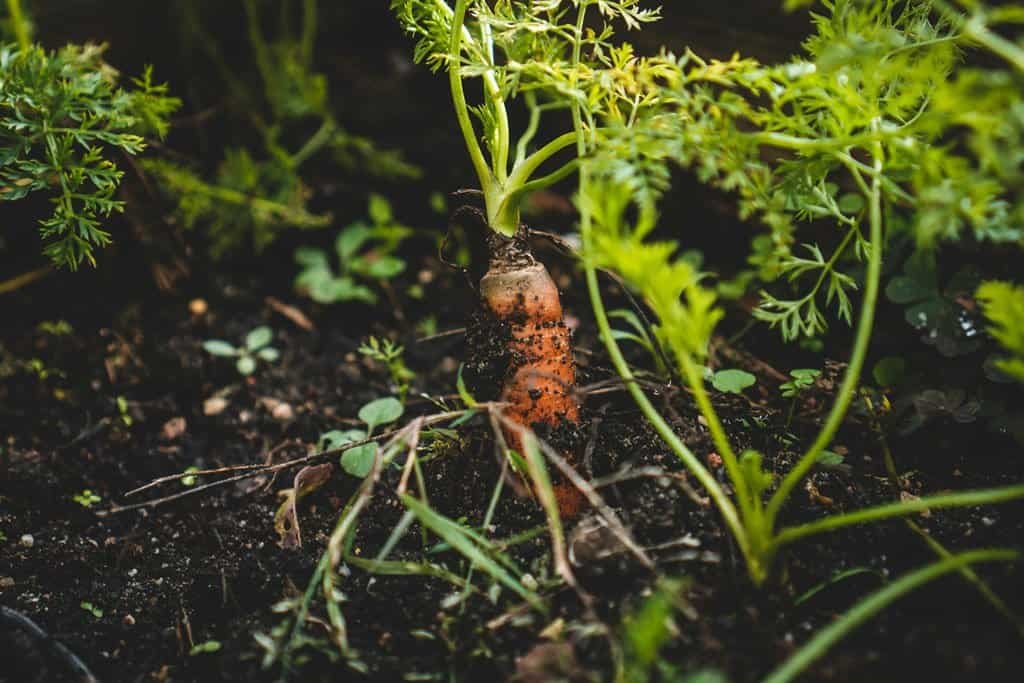
Growing carrots well starts with full sun and deep, loose, stone-free soil with a pH of 6.0-6.8. Heavy or compacted soil is the most common cause of forked, stunted, or misshapen roots, so working the soil deeply before sowing pays off at harvest time.
The University of Illinois Extension has a detailed breakdown of soil prep for straight, healthy roots.
Watering and Feeding
Water gently and consistently to keep soil moist, especially during germination, which can take 1-3 weeks and is easily disrupted by a dry crust forming on the soil surface. Avoid high-nitrogen fertilizers, which encourage leafy top growth at the expense of root development.
Companion Planting
Onions, leeks, and rosemary are good companions when growing carrots, as their strong scents can help confuse carrot rust flies searching for host plants. Avoid planting carrots too close to dill, which can cross-pollinate if allowed to flower and may stunt root growth.
Can You Grow Carrots in Containers?
Yes, growing carrots in containers works well as long as the pot is at least 12 inches deep for standard varieties, or shallower for round or short types like Chantenay. Loose, sifted potting mix helps roots grow straight in a confined space.
Harvesting
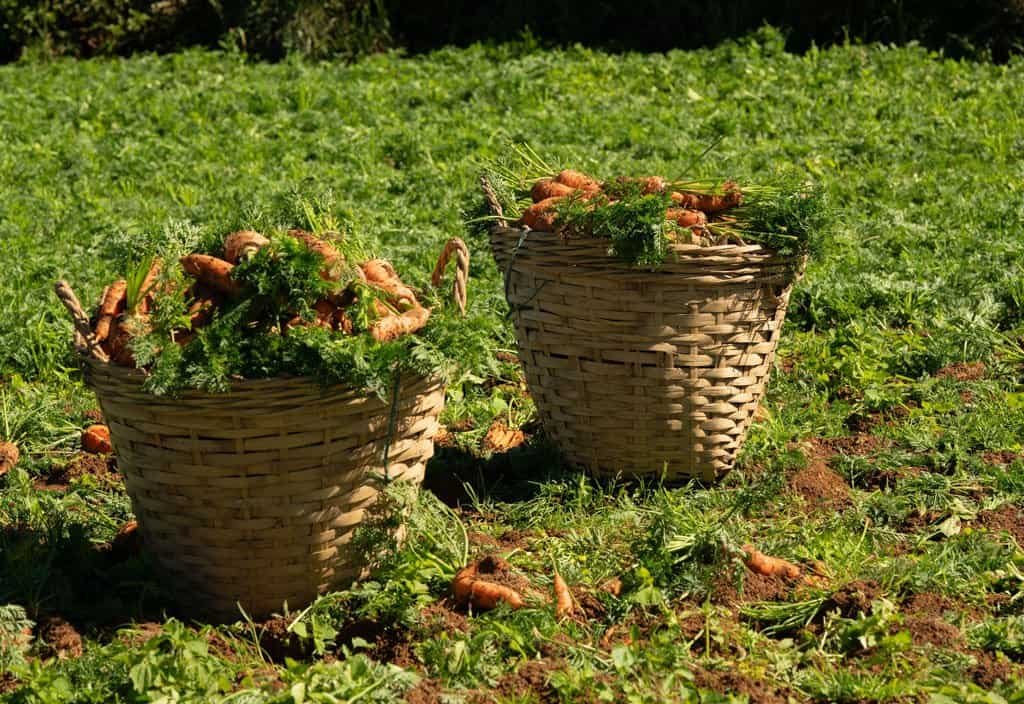
Harvest carrots 60-80 days after sowing, once roots reach a good size, usually visible as shoulders poking up at the soil surface. Pull a test carrot if you’re unsure, and adjust timing for the rest of the bed accordingly.
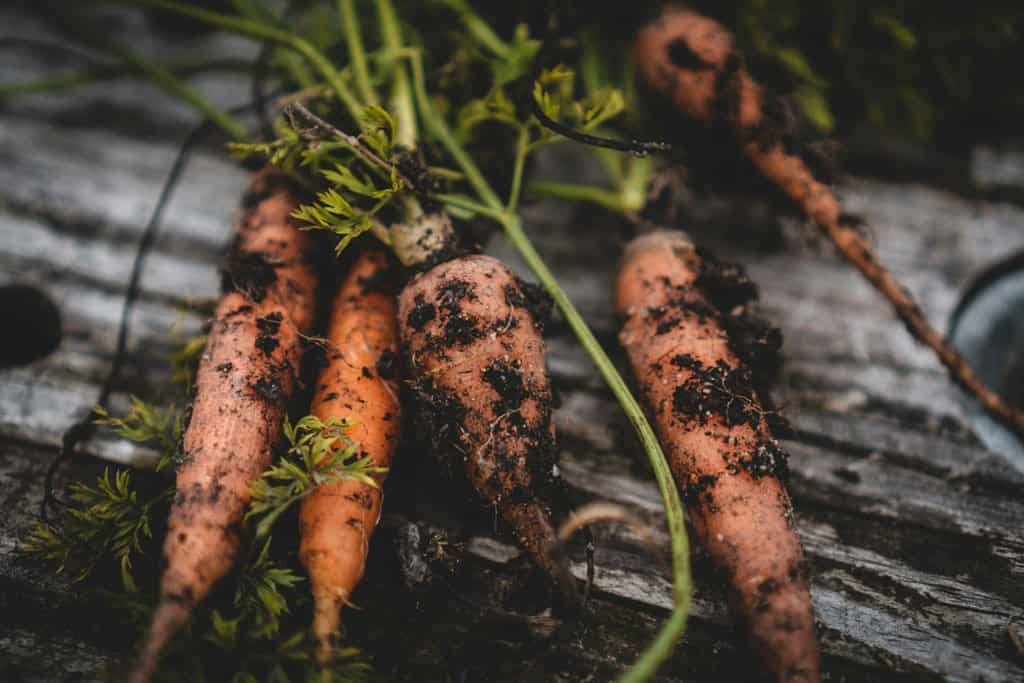
Remove the leafy tops right after harvest, then store carrots in a perforated bag in the fridge for several weeks, or layer them in damp sand in a cool root cellar for months-long storage through winter.
Why Grow Carrots?
Growing carrots at home means access to a rainbow of colors and shapes far beyond the standard orange roots found in stores. Carrots are best known for their beta-carotene content, which the body converts into vitamin A, along with dietary fiber, vitamin K1, and potassium, all in a naturally low-calorie snack.
Common Problems
Forked or twisted roots |
Carrot rust flies |
Slow germination
Carrot Rust Flies: These, along with root-knot nematodes, can be an issue in some regions. Use lightweight row covers to exclude egg-laying insects, and rotate planting locations each year to disrupt pest life cycles.
Forked or Twisted Roots: This is usually caused by rocky or compacted soil, or fresh manure worked in too close to planting time. Loosen soil deeply and remove debris before sowing.
Slow Germination: Carrots can take 1-3 weeks to sprout, and a dry crust on the soil surface easily disrupts the process. Keep the surface consistently moist, watering lightly if needed multiple times a day in hot weather.
Common Beginner Mistakes
These mistakes come up again and again when growing carrots for the first time:
- Planting in heavy, rocky, or compacted soil without amending it first.
- Letting the soil surface dry out during the slow germination period.
- Skipping thinning, leaving roots too crowded to size up.
- Using high-nitrogen fertilizer, which favors leafy tops over roots.
FAQs
Q: Why are my carrots forked or twisted?
A: This is usually caused by rocky or compacted soil; loosen soil deeply and remove debris before sowing.
Q: How long do carrots take to germinate?
A: Typically 1-3 weeks; keep the soil surface consistently moist during this slow germination period.
Q: Can carrots be left in the ground over winter?
A: In milder climates, yes, with a thick layer of mulch; in colder zones, it’s safer to harvest before hard frost.
Q: Can carrots be grown in containers?
A: Yes, growing carrots in a container at least 12 inches deep works well for standard varieties.
Q: Why didn’t my carrot seeds sprout evenly?
A: Uneven germination is common with carrots; keep soil consistently moist and be patient, since some seeds sprout later than others.
Best Varieties for Beginners
Choosing the right variety makes growing carrots easier:
Best beginner variety: Nantes, sweet, cylindrical, and a favorite for fresh eating.
Best for heavy soil: Danvers, known for hardiness in tougher ground.
Best for containers: Chantenay, shorter and wider, well-suited to shallow soil.
Best for color: Rainbow blends, mixing purple, yellow, and white roots.
Related Vegetables
Carrots pair especially well alongside our guides to growing onions and growing tomatoes if you’re planning a full bed.