★★☆☆☆ Difficulty
At a Glance
| Time to Harvest | 50-70 days |
|---|---|
| Sun | Full sun |
| Water | Consistent moisture, especially at germination |
| Good For | Containers ✓ Raised Beds ✓ In-Ground Gardens ✓ |
Quick Reference
| Sun | Full sun; tolerates partial shade |
|---|---|
| Spacing | 3-4 inches apart after thinning |
| Planting Depth | 1/2 inch |
| Days to Harvest | 50-70 days, depending on size at harvest |
| Watering | Consistent moisture; dry crust disrupts germination |
| Soil pH | 6.0-7.0 |
| USDA Zones | Grown as an annual in zones 1-10 |
| Average Yield | 2-5 lbs per 10-foot row |
Before You Plant…
Growing beets is simple once you understand three key things:
- Soak seeds before planting. Beet seed is actually a seed ball with several embryos, and soaking improves germination.
- Thin seedlings early. Crowded beets never size up properly.
- Harvest at the right size. Beets larger than 3 inches often turn tough and fibrous.
Growing Timeline
| Week | What You’ll See |
|---|---|
| 1-2 | Seeds germinate. |
| 3 | True leaves appear; thin crowded seedlings. |
| 5-6 | Roots begin swelling underground. |
| 7-10 | Roots reach harvestable size. |
Timing for growing beets varies by variety, soil temperature, and how consistently the bed is watered.
How to Plant Beets
Direct seed into the garden in early spring and again in late summer for a fall crop. Soak seed in warm water for 24 hours before planting to aid germination. Plant seeds a half-inch deep, with rows spaced 1 to 1.5 feet apart.
Best Planting Time
Growing beets successfully starts with picking the right window for your zone:
| USDA Zone | Best Planting Time |
|---|---|
| 1 | Sow in early-to-mid June, once soil has warmed. |
| 2 | Sow in late May through early June. |
| 3 | Sow in April through May, and again in late summer. |
| 4 | Sow in April through May, and again in late summer. |
| 5 | Sow in April, and again in late July. |
| 6 | Sow in March through April, and again in July. |
| 7 | Sow in March through April, and again in July. |
| 8 | Sow in February through March, and September. |
| 9 | Sow in February through March, and September. |
| 10 | Grow fall through early spring, avoiding summer heat. |
| 11 | Grow fall through early spring, avoiding summer heat. |
Local frost dates matter more than zone alone. The last practical planting date for a fall crop is roughly six weeks before your first killing frost.
How to Care for Beets
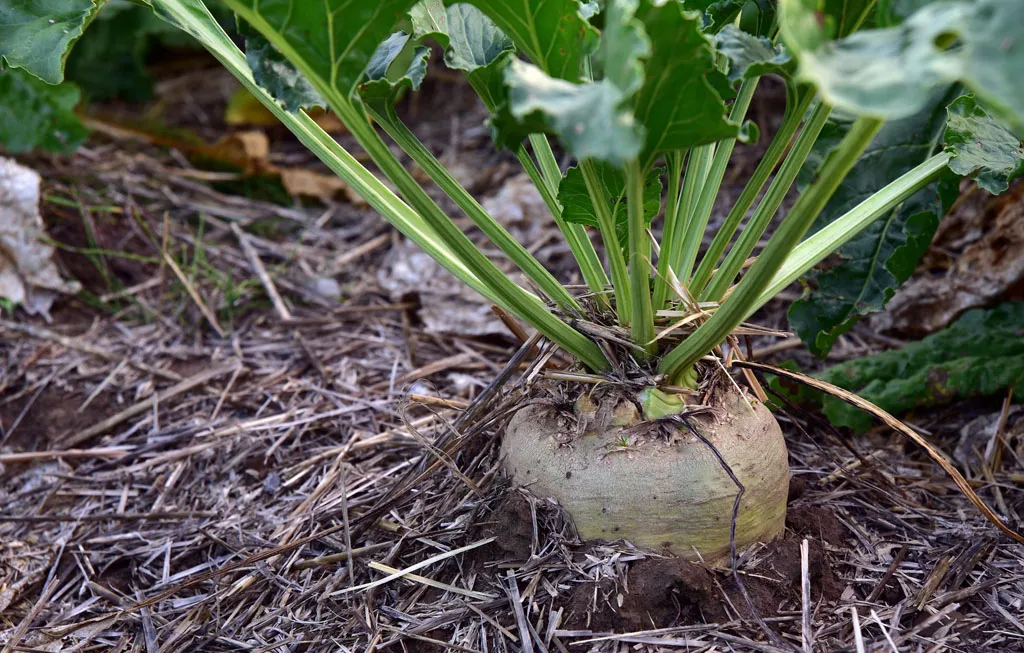
Growing beets well starts with loose, well-drained soil in a sunny location, amended generously with compost or well-rotted manure if the soil is heavy clay. Boron deficiency in sandy soils can cause black spots inside roots, so consider a soil test if this becomes an issue.
The University of Maryland Extension offers a detailed guide to beet planting and care.
Preventing Poor Germination
Poor germination is a common problem with beets, typically happening in dry soils where a crust forms on the surface. A light layer of mulch applied after sowing prevents crusting and helps retain moisture during germination.
Companion Planting
Onions, lettuce, and brassicas pair well when growing beets, since their differing root depths avoid competition. Avoid planting beets near pole beans, which can stunt beet growth.
Can You Grow Beets in Containers?
Yes. Use a container at least 12 inches deep to give roots room to develop fully. Beet greens alone can be grown in shallower containers if you’re mainly after the tops rather than the roots.
Harvesting
Beets may be harvested when roots are 1 inch in diameter for a tender, sweet baby beet, but the main crop is usually harvested at 1.5 to 3 inches. Trim foliage to within a half-inch to an inch of the root after harvest, but don’t discard the greens.
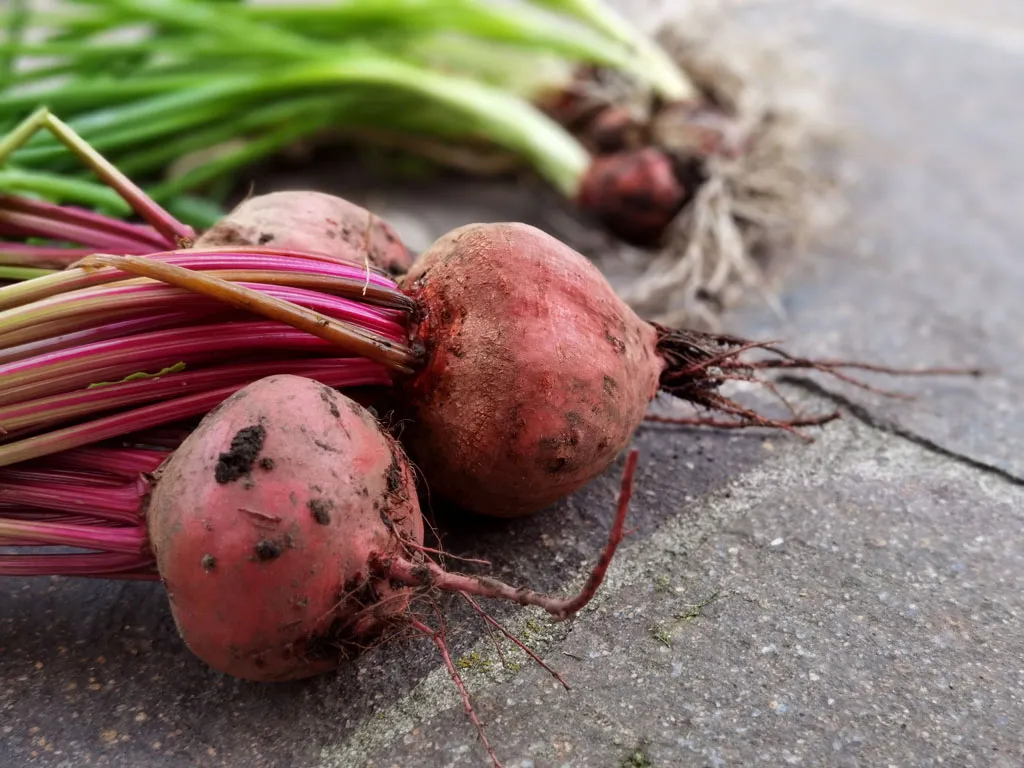
Beets store best in a very cold, humid environment around 32°F. In the refrigerator, store roots in a vented plastic bag; they’ll keep for several weeks. Beets can also be frozen, canned, or pickled for longer storage.
Why Grow Beets?
Growing beets gives you a genuine two-for-one crop: sweet, earthy roots and nutritious greens that taste similar to Swiss chard. Beet greens are an excellent source of vitamin A and calcium, while the roots provide fiber, folate, and manganese.
Common Problems
Poor germination |
Leaf miners and root maggots |
Tough, fibrous roots
Leaf Miners and Root Maggots: Leaf miners tunnel through leaves, leaving pale trails, while root maggots can damage developing roots. Row covers help protect young plants.
Poor Germination: Dry, crusted soil is the most common cause. Soak seeds before planting and keep the soil surface consistently moist until seedlings emerge.
Tough, Fibrous Roots: This happens when beets grow too large or are left in the ground too long. Harvest at 1.5 to 3 inches for the best texture.
Common Beginner Mistakes
These mistakes come up again and again when growing beets for the first time:
- Skipping the seed soak, leading to poor or uneven germination.
- Letting the soil surface dry out and crust over.
- Not thinning seedlings, resulting in crowded, small roots.
- Waiting too long to harvest, producing woody roots.
FAQs
Q: Why didn’t my beet seeds germinate well?
A: Dry, crusted soil is the most common cause; soak seeds first and keep the surface consistently moist.
Q: Can beets be grown in containers?
A: Yes, in a container at least 12 inches deep to give roots room to develop.
Q: Can I eat beet greens?
A: Yes, beet greens are edible and nutritious, similar to Swiss chard, and can be harvested without harming the root.
Q: Why are my beets tough and woody?
A: This usually means they grew too large or were left in the ground too long; harvest at 1.5 to 3 inches.
Q: How long do beets store?
A: Properly stored in a cold, humid environment, beets can last several weeks to months.
Best Varieties for Beginners
Choosing the right variety makes growing beets easier:
Best beginner variety: Detroit Dark Red, a reliable, classic round beet.
Best for slicing: Cylindra, producing many uniform slices per root.
Best for pickling: Chioggia, with striking pink-and-white rings.
Best for greens: Bull’s Blood, prized for deep red, tender tops.
Related Vegetables
If you’re planning a root vegetable bed, check out our guides to growing carrots and growing radishes.