★★★☆☆ Difficulty
At a Glance
| Time to Harvest | 60-90 days, depending on variety |
|---|---|
| Sun | Full sun |
| Water | Keep soil evenly moist, not waterlogged |
| Good For | Containers ✓ Raised Beds ✓ In-Ground Gardens ✓ |
Quick Reference
| Sun | Full sun (6-8 hours per day) |
|---|---|
| Spacing | 18-24 inches apart |
| Planting Depth | 1/4 inch for seeds |
| Days to Harvest | 60-90 days, depending on variety and conditions |
| Watering | 1-2 inches per week; inconsistent watering causes blossom end rot |
| Soil pH | 6.5-7.0 |
| USDA Zones | Zones 4-11 outdoors; zones 1-3 need a greenhouse or high tunnel |
| Average Yield | 5-10 peppers per plant |
Before You Plant…
Growing bell peppers rewards patience more than almost any other vegetable:
- Wait for truly warm weather to transplant. Cold soil and cool nights stunt growth for weeks.
- Water consistently, not heavily. Inconsistent moisture causes blossom end rot.
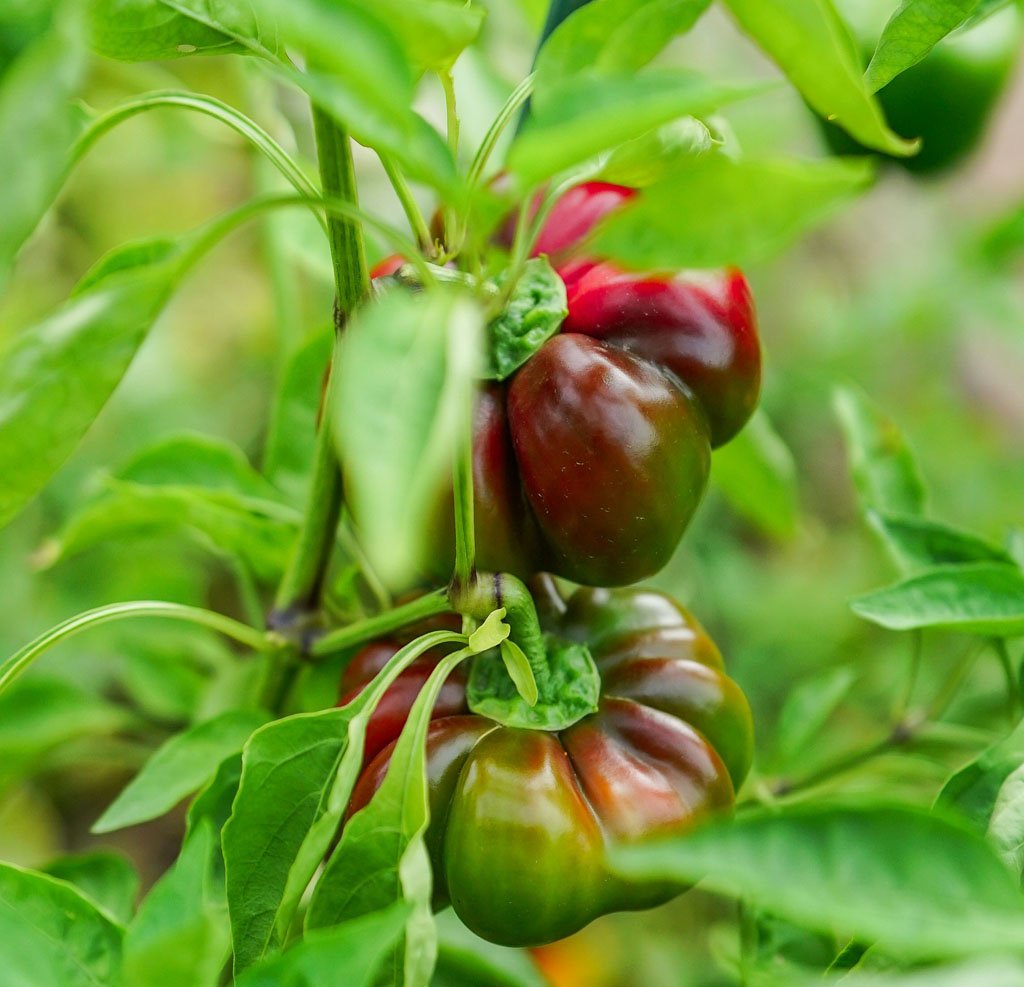
- Let a few peppers ripen fully before picking. Flavor and nutrition improve significantly as they turn red, yellow, or orange.
Growing Timeline
| Week | What You’ll See |
|---|---|
| 1-2 | Seeds germinate indoors. |
| 8 | Transplant outdoors once nights stay reliably warm. |
| 12-14 | Flowering begins. |
| 16-20 | First green peppers are ready; full ripening takes a few weeks more. |
Timing varies by variety, weather, and whether you begin with seeds or transplants.
How to Plant Bell Peppers
Start seeds indoors about 8 weeks before your last frost date, using a heat mat to keep soil temperature between 80-90°F for reliable germination. Harden seedlings off gradually. Transplant outdoors only after all frost danger has passed and nights stay above 55°F, spacing plants 18-24 inches apart.
Best Planting Time
| USDA Zone | Best Planting Time |
|---|---|
| 1 | Best grown in a greenhouse or high tunnel; outdoor success is limited by the short season. |
| 2 | Best grown in a greenhouse or high tunnel, or with row cover protection outdoors. |
| 3 | Start indoors in late February and transplant outdoors in late May-June. |
| 4 | Start indoors in late February and transplant outdoors in late May-June. |
| 5 | Start indoors in late February and transplant outdoors in late May-June. |
| 6 | Start indoors in March and transplant in May. |
| 7 | Start indoors in March and transplant in May. |
| 8 | Start indoors in February and transplant in April. |
| 9 | Start indoors in February and transplant in April. |
| 10 | Plant nearly year-round, avoiding the hottest stretch of summer. |
| 11 | Plant nearly year-round, avoiding the hottest stretch of summer. |
Local frost dates and summer temperatures matter more than zone alone. Aim for steady growth once nights stay above 55°F.
How to Care for Bell Peppers
Growing bell peppers well starts with full sun and warm soil, ideally with a pH between 6.5 and 7.0. Too much nitrogen fertilizer produces bushy, leafy plants with little fruit, so feed lightly with a balanced, low-nitrogen fertilizer.
The University of Minnesota Extension offers detailed guidance for cooler climates.
Preventing Blossom Drop
Blossom drop is usually caused by temperature stress, either nights below 55°F or days above 90°F, both of which interfere with pollination. Inconsistent watering can also cause flowers to abort. Row covers can buffer against occasional cold snaps.
Companion Planting
Basil, onions, and carrots are excellent companions when growing bell peppers, with basil in particular thought to improve flavor and repel aphids. Avoid planting peppers near fennel, and rotate away from other nightshades like tomatoes.
Can You Grow Bell Peppers in Containers?
Yes. Use a container that holds at least 5 gallons, especially for compact varieties bred for container growing. Containers also warm up faster than garden soil in spring, which can be an advantage in cooler climates.
Harvesting
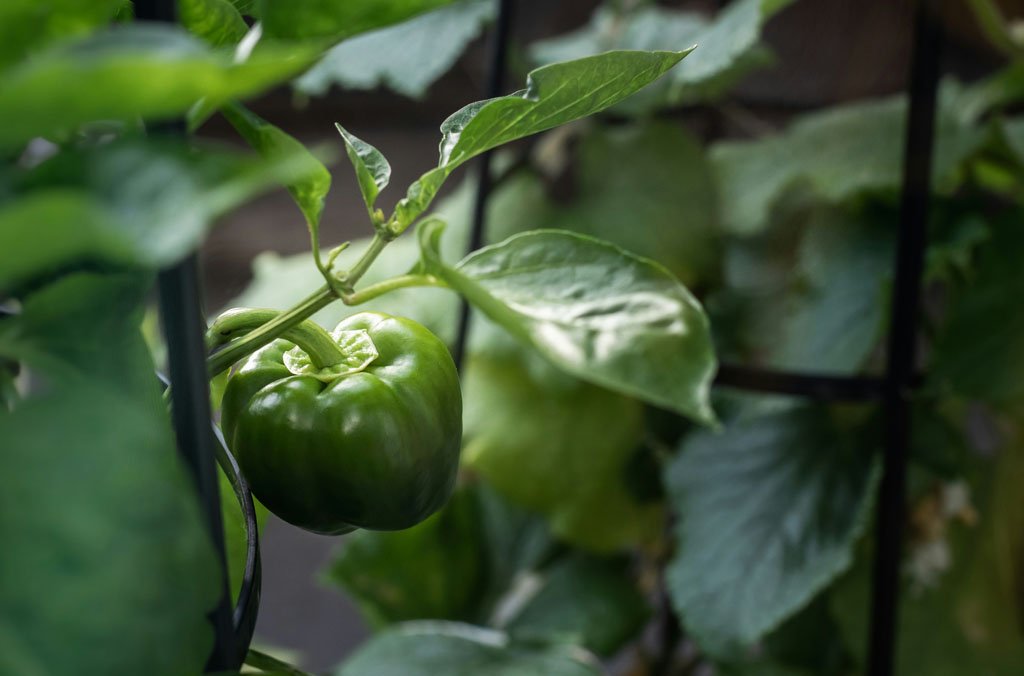
Bell peppers can be harvested green, but they become sweeter and more nutrient-dense the longer they’re left to ripen. Use scissors or pruning snips rather than pulling by hand, since twisting can damage the brittle stems.
Fresh peppers keep about 1-2 weeks in the refrigerator’s crisper drawer. For longer storage, peppers freeze well when sliced and can also be dried or roasted and preserved in oil. Growing bell peppers successfully comes down to patience with heat and consistency with water.
Why Grow Bell Peppers?
Growing bell peppers is worth it for the vitamin C alone; they’re exceptionally high in it, often providing more per serving than citrus fruit once ripened to red or yellow. They also supply vitamin A and antioxidants while remaining low in calories, and they’re one of the more expensive vegetables at the grocery store.
Common Problems
Flowers dropping, no fruit |
Aphids and blossom end rot |
Peppers growing slowly
Flowers Dropping Without Fruit: Temperature extremes or inconsistent watering are the usual cause. There’s little to do beyond waiting out extreme weather, though row covers help buffer occasional cold snaps.
Aphids and Blossom End Rot: Aphids can be managed with a strong stream of water or insecticidal soap. Blossom end rot is almost always traced back to inconsistent watering rather than a pest or disease.
Peppers Growing Slowly: Cool soil and nighttime temperatures below 55°F are the most common cause of stunted growth. Resist transplanting early; wait until conditions are reliably warm both day and night.
Common Beginner Mistakes
These mistakes come up again and again when growing bell peppers for the first time:
- Transplanting too early into cold soil.
- Over-fertilizing with nitrogen, producing leaves instead of fruit.
- Harvesting everything green instead of letting some peppers ripen.
- Skipping row covers during unexpected cold snaps.
FAQs
Q: Why are my peppers small and slow to grow?
A: Cool soil and nighttime temperatures below 55°F often stunt growth when growing bell peppers.
Q: Can bell peppers be grown in containers?
A: Yes, a 5-gallon container or larger works well.
Q: Do green and red bell peppers come from different plants?
A: No, red, yellow, and orange peppers are simply green peppers left to ripen longer.
Q: Why is my pepper plant flowering but not fruiting?
A: Temperature extremes or inconsistent watering often cause blossom drop.
Q: How long does it take a pepper to turn red?
A: Usually 2-3 additional weeks after reaching full green size.
Best Varieties for Beginners
Choosing the right variety makes growing bell peppers easier, especially in a shorter season:
Best beginner variety: California Wonder, the classic large, blocky green-to-red type.
Best yellow variety: Golden California Wonder.
Best for containers: Redskin or Mohawk, compact and productive.
Best disease resistance: King Arthur, bred for reliable performance.
Best early variety: Ace, one of the fastest-maturing bell types.
Related Vegetables
If you’re rounding out a warm-season garden, check out our guides to growing tomatoes and growing cucumbers.