★★★☆☆ Difficulty
At a Glance
| Time to Harvest | 90-110 days, longer for full-size sprouts |
|---|---|
| Sun | Full sun |
| Water | Water thoroughly once a week |
| Good For | Containers ✓ Raised Beds ✓ In-Ground Gardens ✓ |
Quick Reference
| Sun | Full sun (6+ hours per day) |
|---|---|
| Spacing | 18 inches apart |
| Planting Depth | 1/4-1/2 inch for seeds |
| Days to Harvest | 90-110 days, depending on variety |
| Watering | Thorough weekly watering for large, sweet sprouts |
| Soil pH | 6.0-7.0 |
| USDA Zones | Grown as an annual in zones 2-9 |
| Average Yield | 50-100 sprouts per plant |
Before You Plant…
Growing Brussels sprouts is a long game, but three things matter most:
- Plant for a fall harvest. Sprouts sweeten after exposure to cold, even light frost.
- Water thoroughly and consistently. Inconsistent watering leads to loose, poorly formed sprouts.
- Rotate away from other cole crops. Avoid planting where cabbage, broccoli, or kale grew in the past four years.
Growing Timeline
| Week | What You’ll See |
|---|---|
| 1-2 | Seeds germinate indoors. |
| 6-8 | Transplant outdoors as sturdy seedlings. |
| 10-14 | Small sprouts begin forming at leaf joints, starting from the bottom. |
| 13-16 | Sprouts reach harvestable size, often after the first frost. |
Timing for growing Brussels sprouts varies by variety and how late into fall you plan to harvest.
How to Plant Brussels Sprouts
Sow seeds indoors in June using sterile seedling mix, pressing seeds a quarter to a half-inch deep. Direct-seeded plants take up to three weeks longer to mature, so gardeners in colder climates should use transplants. Space plants 18 inches apart.
Best Planting Time
Growing Brussels sprouts successfully starts with picking the right window for your zone:
| USDA Zone | Best Planting Time |
|---|---|
| 1 | Best grown with season extension; short outdoor season limits full maturity. |
| 2 | Start indoors in May, transplant in early June for a compressed fall harvest. |
| 3 | Start seeds indoors or direct sow in June for a fall crop. |
| 4 | Start seeds indoors or direct sow in June for a fall crop. |
| 5 | Start seeds indoors or direct sow in June for a fall crop. |
| 6 | Start indoors in May-June for fall harvest. |
| 7 | Start indoors in May-June for fall harvest. |
| 8 | Start in July for a fall and early winter harvest. |
| 9 | Start in July for a fall and early winter harvest. |
| 10 | Grow as a fall through winter crop. |
| 11 | Grow as a fall through winter crop, avoiding summer heat entirely. |
Local frost dates matter more than zone alone. Brussels sprouts are one of the few crops usually harvested after snow has fallen.
How to Care for Brussels Sprouts
Growing Brussels sprouts well means starting with well-drained, fertile soil with a pH between 6.0 and 7.0. Improve soil by adding well-rotted manure or compost, and side-dress with fertilizer once plants reach about four inches tall.
The University of Minnesota Extension offers detailed guidance on timing and care for a strong fall harvest.
Why Cold Weather Improves Flavor
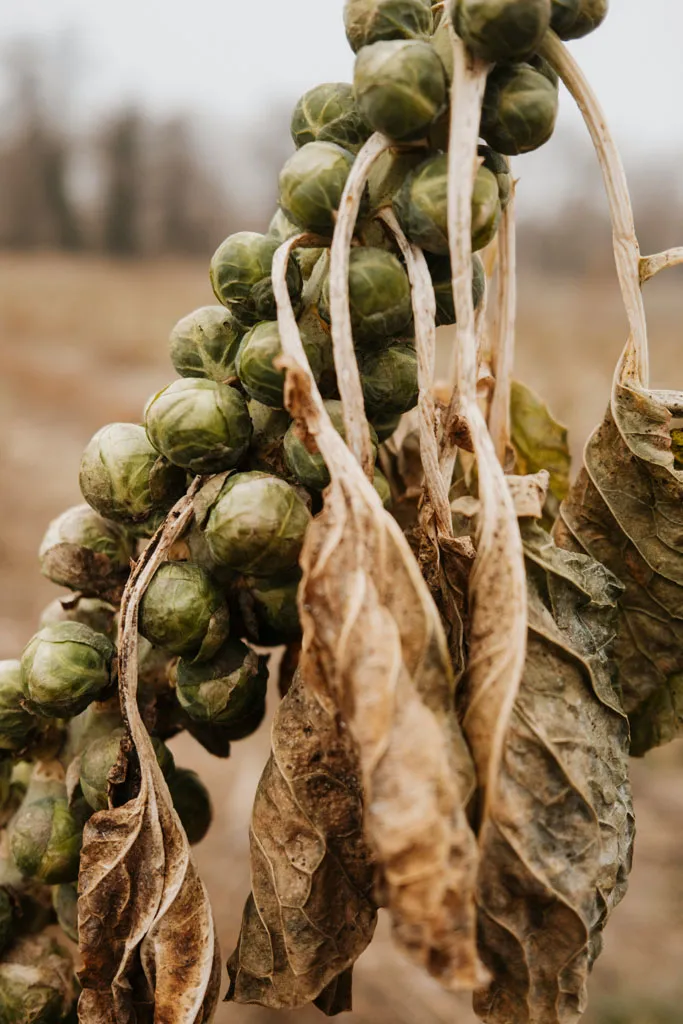
Brussels sprouts can stay in the garden as long as temperatures remain above 20°F, and exposure to cold triggers the plant to convert starches into sugars, producing noticeably sweeter sprouts. This makes them one of the few vegetables that genuinely improve after the first frost.
Companion Planting
Practice crop rotation and avoid planting where cabbage, cauliflower, broccoli, collards, kale, mustard, turnip, or rutabaga have grown in the past four years, since these related crops share pests and diseases.
Can You Grow Brussels Sprouts in Containers?
Yes, though they need a large container, at least 5 gallons, since the plants grow tall and produce over a long season. Full sun and consistent watering matter even more in a container than in the ground.
Harvesting
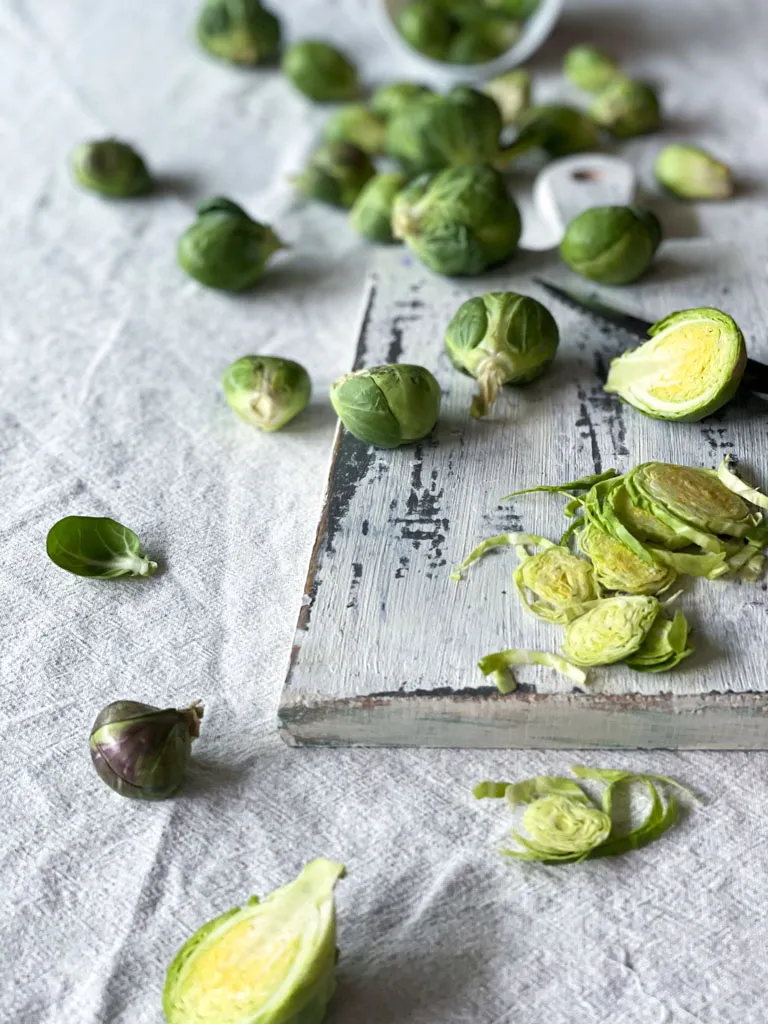
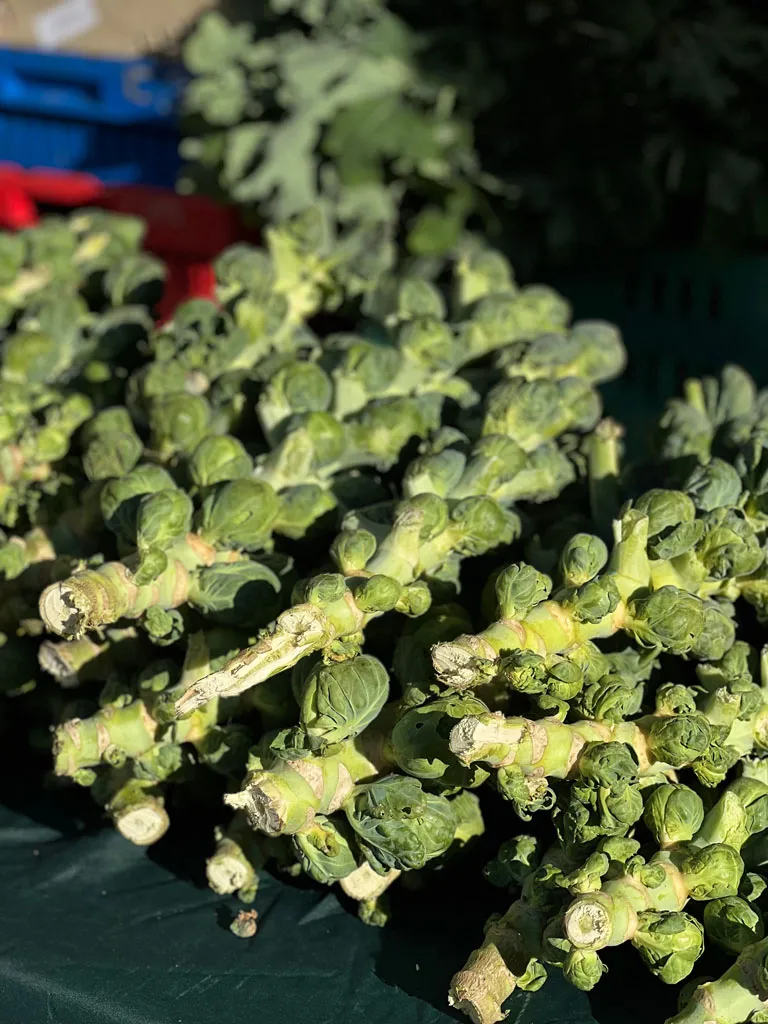
Sprouts form starting at the base of the stalk and mature upward, so harvest the lowest, largest sprouts first by twisting or cutting them off. Sprouts can be as large as two inches in diameter, though many gardeners prefer to harvest them slightly smaller for the best texture.
Fresh Brussels sprouts keep about one to two weeks in the refrigerator, stored unwashed in a perforated bag. For longer storage, blanch briefly in boiling water, cool in ice water, and freeze.
Why Grow Brussels Sprouts?
Growing Brussels sprouts is worth the wait; they’re high in vitamins C and K and a good source of fiber, manganese, vitamin B6, and copper. A single plant can produce 50 to 100 sprouts, making it one of the more productive crops for the space it occupies.
Common Problems
Swollen, stunted roots |
Cabbage worms |
Loose, poorly formed sprouts
Cabbage Worms: These attack the leaves of cole crops broadly. Row covers early in the season and regular inspection help keep populations down.
Swollen, Stunted Roots: This is likely clubroot, a soilborne disease that causes roots to swell and plants to become stunted. Practice crop rotation, avoiding cole crops in the same spot for at least four years.
Loose, Poorly Formed Sprouts: This usually results from inconsistent watering or heat stress during sprout formation. Water thoroughly once a week for well-formed, dense sprouts.
Common Beginner Mistakes
These mistakes come up again and again when growing Brussels sprouts for the first time:
- Planting too late, missing the window for cold weather to sweeten sprouts.
- Inconsistent watering, leading to loose or small sprouts.
- Harvesting from the top of the stalk instead of the bottom first.
- Skipping crop rotation, increasing clubroot risk.
FAQs
Q: Do Brussels sprouts really taste better after frost?
A: Yes, cold exposure triggers the plant to convert starches into sugars, producing sweeter sprouts.
Q: Can Brussels sprouts be grown in containers?
A: Yes, in a container at least 5 gallons with full sun and consistent watering.
Q: Why are my sprouts small and loose instead of tight?
A: This usually comes from inconsistent watering; water thoroughly once a week.
Q: Which sprouts should I harvest first?
A: The lowest sprouts on the stalk mature first and should be harvested before working upward.
Q: How cold can Brussels sprouts tolerate?
A: They can stay in the garden as long as temperatures remain above 20°F.
Best Varieties for Beginners
Choosing the right variety makes growing Brussels sprouts easier:
Best beginner variety: Long Island Improved, a reliable, compact classic.
Best cold tolerance: Diablo, bred for excellent fall and winter hardiness.
Best flavor: Churchill, known for sweet, dense sprouts.
Best for containers: Jade Cross, a compact hybrid with good disease resistance.
Related Vegetables
If you’re planning a cool-season garden, check out our guides to growing cabbage and growing broccoli.