★★☆☆☆ Difficulty
Growing Broccoli at a Glance
| Time to Harvest | 60-100 days, depending on variety |
|---|---|
| Sun | Full sun |
| Water | Keep soil consistently moist |
| Good For | Containers ✓ Raised Beds ✓ In-Ground Gardens ✓ |
Quick Reference for Growing Broccoli
| Sun | Full sun (6+ hours per day) |
|---|---|
| Spacing | 18-24 inches apart |
| Planting Depth | 1/4-1/2 inch for seeds |
| Days to Harvest | 60-100 days, depending on variety and conditions |
| Watering | 1-1.5 inches per week; inconsistent watering causes small heads |
| Soil pH | 6.0-7.0 |
| USDA Zones | Grown as an annual in zones 1-10 |
| Average Yield | 1 main head plus multiple side shoots per plant |
Before You Plant…
Growing broccoli is manageable once you get the timing and moisture right:
- Plant for cool-weather maturity. Hot weather during head formation causes small, loose heads.
- Water consistently. Even brief dry spells can stunt head size.
- Leave the plant in after the first cut. Side shoots often add up to more broccoli than the original head.
Growing Broccoli Timeline
| Week | What You’ll See |
|---|---|
| 1-2 | Seeds germinate (if starting from seed). |
| 4-6 | Transplant outdoors as sturdy seedlings. |
| 8-10 | A central head begins forming. |
| 10-14 | Main head is ready to harvest; side shoots follow for weeks after. |
Timing varies by variety, weather, and whether you begin with seeds or transplants.
How to Plant Broccoli
Start seeds indoors 4-6 weeks before your last frost date, or purchase sturdy transplants from a garden center. Harden seedlings off gradually before moving them outdoors. Space plants 18-24 inches apart, in a location where no related brassica crop has grown for at least three years.
Best Planting Time
| USDA Zone | Best Planting Time |
|---|---|
| 1 | Start seeds indoors in April. Transplant outdoors after the last frost, typically mid-June. |
| 2 | Start indoors in April and transplant after frost danger has passed, typically early June. |
| 3 | Start indoors in March for a May transplant, or direct seed in July for a fall crop. |
| 4 | Start indoors in March for a May transplant, or direct seed in July for a fall crop. |
| 5 | Start indoors in March for a May transplant, or direct seed in July for a fall crop. |
| 6 | Start indoors February-March, or direct seed in July-August. |
| 7 | Start indoors February-March, or direct seed in July-August. |
| 8 | Plant in fall or late winter to avoid summer heat. |
| 9 | Plant in fall or late winter to avoid summer heat. |
| 10 | Grow primarily fall through spring. |
| 11 | Grow primarily fall through spring, during the coolest months. |
Local frost dates and summer temperatures matter more than zone alone. Aim for steady growth during temperatures around 60-70°F.
How to Care for Broccoli
Growing broccoli well comes down to steady, uninterrupted growth. Keep the soil evenly moist, add compost before planting, and apply mulch to help retain moisture. Plants grow best in fertile soil with a pH between 6.0 and 7.0.
The University of Minnesota Extension covers timing and variety selection in more detail.
Getting a Second Harvest from Side Shoots
After cutting the central head, leave the plant in place. Smaller side shoots will continue developing from the leaf joints for 3-4 weeks, often adding up to as much broccoli as the original head.
Companion Planting
Onions, dill, and chamomile are good companions when growing broccoli, helping to repel pests while attracting beneficial insects. Avoid planting broccoli near tomatoes or strawberries, which compete for similar nutrients.
Growing Broccoli in Containers?
Yes. Use one plant per container and choose a pot that holds at least 5 gallons. Fill it with quality potting mix, provide full sun, and check moisture frequently since containers dry out faster than garden beds.
Harvesting
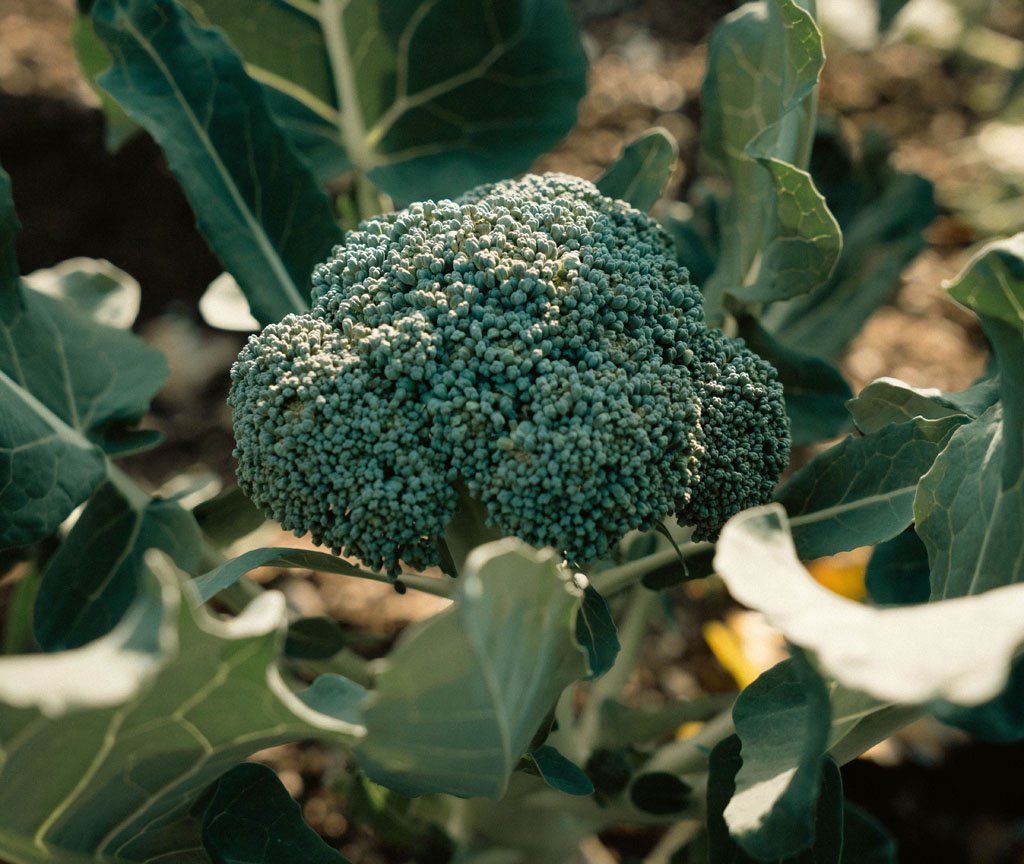
Harvest the central head while buds are still tight and green, before any yellow flowers appear, cutting several inches of stalk along with it. Side shoots will continue developing for several more weeks after the main harvest.
Fresh broccoli keeps about one week in the refrigerator, stored loosely in a perforated bag. For longer storage, blanch florets briefly in boiling water, cool them in ice water, and freeze.
Why Grow Broccoli?
Broccoli is an excellent source of vitamin C and vitamin K, and provides fiber, folate, and antioxidant compounds. It’s also one of the more expensive vegetables at the grocery store, making home-grown broccoli a genuine money-saver.
Common Problems
Small or loose heads |
Cabbage worms and aphids |
Flowering too early
Cabbage Worms and Aphids: Inspect the undersides of leaves regularly. Floating row covers prevent moths from laying eggs, while a strong stream of water can dislodge aphids.
Small or Loose Heads: Also called buttoning, this is almost always caused by heat stress or overcrowding. Broccoli needs consistently cool temperatures and adequate spacing to form a large, tight head.
Flowering Too Early: Premature flowering is usually triggered by heat stress or a cold snap during the seedling stage. Plant early enough to mature before summer heat, and avoid transplanting stressed seedlings.
Common Beginner Mistakes when Growing Broccoli
- Planting too late for spring, forcing heads to form during summer heat.
- Overcrowding plants, which reduces airflow and head size.
- Harvesting too late, after buds begin to yellow or separate.
- Removing the plant right after the first harvest instead of leaving it for side shoots.
FAQs
Q: Why did my broccoli form a tiny head instead of a large one?
A: This is usually caused by heat stress or overcrowding; plant early enough to mature before hot summer weather.
Q: Can broccoli be grown in containers?
A: Yes, as long as the container is at least 5 gallons with full sun.
Q: Will broccoli keep producing after the first harvest?
A: Yes, side shoots continue forming for several weeks after the main head is cut.
Q: How do I know when to harvest broccoli?
A: Cut the head while buds are tight and green, before any yellow petals appear.
Q: Can broccoli survive frost?
A: Yes, broccoli tolerates light frost well and often tastes sweeter after a cold snap.
Best Varieties for Beginners
Best beginner variety: Calabrese, the classic large-headed type.
Best cold tolerance: Waltham 29, reliable for fall harvests.
Best for containers: De Cicco, compact with heavy side-shoot production.
Best disease resistance: Green Magic, bred for consistent head formation.
Best unique type: Purple Sprouting, which produces many small spears instead of one large head.
Related Vegetables
If you’re planning a cool-season garden, check out our guides to growing carrots and growing onions.