★☆☆☆☆ Difficulty
At a Glance
| Time to Harvest | 50-70 days |
|---|---|
| Sun | Full sun |
| Water | Regular moisture, especially during flowering |
| Good For | Containers ✓ Raised Beds ✓ In-Ground Gardens ✓ |
Quick Reference
| Sun | Full sun (6+ hours per day) |
|---|---|
| Spacing | 1-3 inches apart, rows 18-24 inches apart |
| Planting Depth | 1-2 inches |
| Days to Harvest | 50-70 days from direct seeding |
| Watering | Regular moisture; critical once pods begin developing |
| Soil pH | 6.0-7.0 |
| USDA Zones | Grown as an annual in zones 1-11 |
| Average Yield | 3-5 lbs per 10-foot row |
Before You Plant…
Growing peas is one of the most reliable ways to start the gardening season:
- Plant as early as soil allows. Peas germinate in cool soil and thrive in mild spring temperatures.
- Give climbing varieties a trellis. Tall vine types need support to produce their best.
- Pick often once pods fill out. Regular harvesting keeps plants producing longer.
Growing Timeline
| Week | What You’ll See |
|---|---|
| 1-2 | Seeds germinate. |
| 3-4 | Vines begin climbing or spreading. |
| 6-7 | Flowering begins. |
| 7-10 | Pods fill out and are ready to harvest. |
Timing for growing peas varies by variety, with tall vine types taking longer than bush types.
How to Plant Peas
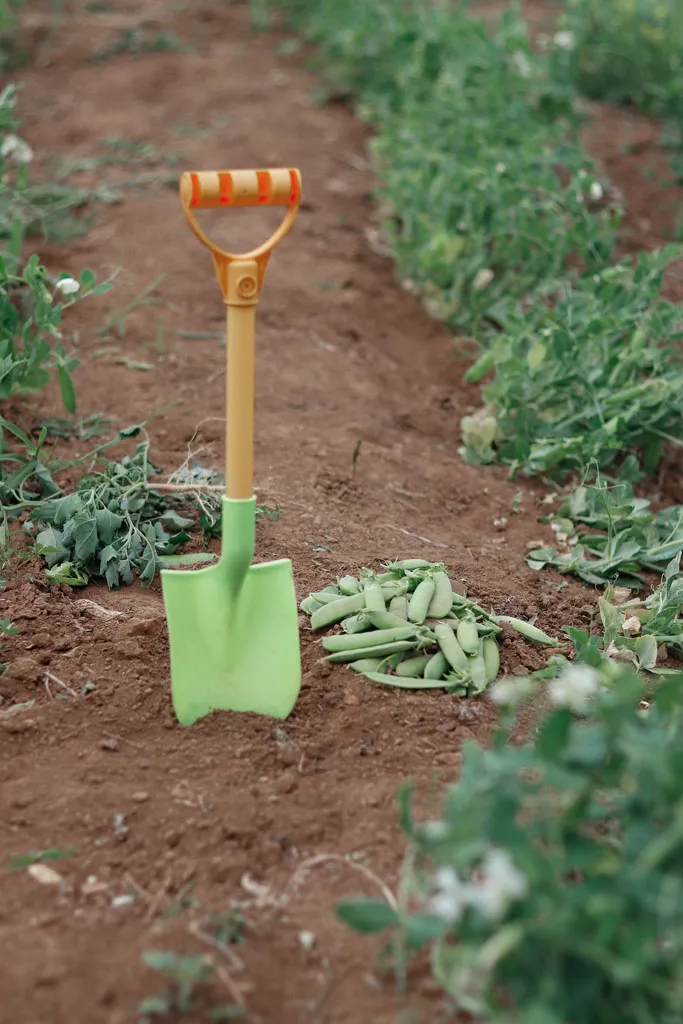
Plant seeds as soon as the ground has thawed and the soil is workable, sowing 1-2 inches deep and 1-3 inches apart. Tall vine varieties, which can grow up to five feet, need a trellis for support, while shorter bush types stand well on their own.
Best Planting Time
Growing peas successfully starts with picking the right window for your zone:
| USDA Zone | Best Planting Time |
|---|---|
| 1 | Sow in late May through early June, once soil has thawed. |
| 2 | Sow in mid-to-late May. |
| 3 | Sow in April, as soon as soil can be worked. |
| 4 | Sow in April, as soon as soil can be worked. |
| 5 | Sow in late March through April. |
| 6 | Sow in March, and again in August for a fall crop. |
| 7 | Sow in March, and again in August for a fall crop. |
| 8 | Sow in February, and September for fall. |
| 9 | Sow in February, and September for fall. |
| 10 | Grow fall through early spring, avoiding summer heat. |
| 11 | Grow fall through early spring, avoiding summer heat. |
Local frost dates matter less than soil temperature, since peas tolerate cold soil better than most vegetables.
How to Care for Peas
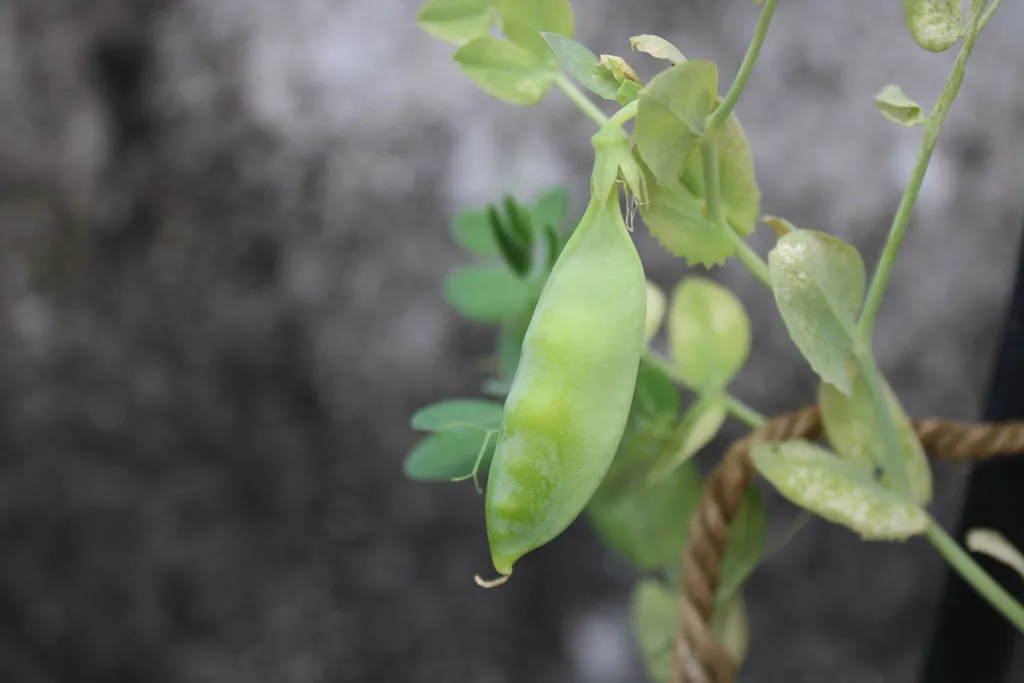
Growing peas well starts with fertile, well-drained soil and full sun, at temperatures between 55-65°F for best growth. Peas need less fertilizer than most crops, since they fix some of their own nitrogen through root nodules.
The University of Minnesota Extension offers detailed guidance on variety selection and trellising.
Managing Heat Stress
Pea growing season is short wherever a cool spring turns quickly to a hot summer. Hot day and night temperatures can cause flowers to abort, reducing yield, and can also lead to poor pollination, resulting in fewer pods with smaller peas.
Companion Planting
Carrots, radishes, and cucumbers pair well when growing peas, since peas fix nitrogen that benefits neighboring crops. Avoid planting peas near onions or garlic, which can inhibit pea growth.
Can You Grow Peas in Containers?
Yes. Bush varieties do especially well in containers at least 12 inches deep, while climbing types need a small trellis attached to the pot. Peas are one of the easier crops for container gardening thanks to their compact root systems.
Harvesting
As soon as you pick the peas, cool them quickly to preserve sweetness. Shelling peas are ready when pods are plump and well-filled; snow peas are picked while flat and before seeds enlarge; sugar snap peas are harvested when pods are tender but the peas inside are nearly mature.
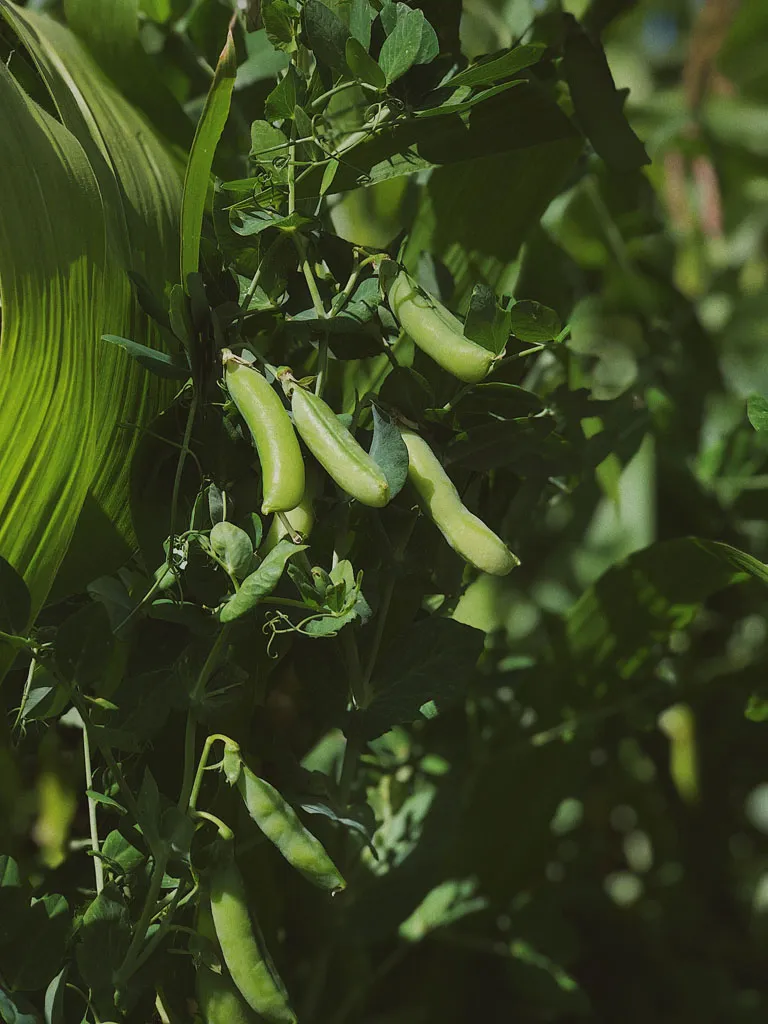
Fresh peas keep about a week or more in the refrigerator if cooled quickly after picking. For longer storage, peas freeze exceptionally well, retaining much of their sweetness and texture.
Why Grow Peas?
Growing peas is a traditional home garden favorite worldwide, offering an early-season harvest before most other crops are even planted. They provide fiber, vitamin C, and vitamin K, and their nitrogen-fixing roots actually improve soil fertility for future plantings.
Common Problems
Aphids and cutworms |
Powdery mildew |
Flowers dropping in heat
Aphids and Cutworms: Aphids can colonize plants in large numbers, causing leaf curling and stickiness. Cutworms can cut young seedlings off at the base. Natural predators often help keep aphid populations in check.
Powdery Mildew: This develops during hot, dry weather, affecting all parts of the plant. Good airflow and timely planting for cooler weather help prevent it.
Flowers Dropping in Heat: Hot temperatures above 80°F cause flowers to abort, reducing yield. There’s little to do beyond timing plantings for cooler weather.
Common Beginner Mistakes
These mistakes come up again and again when growing peas for the first time:
- Planting too late, running into hot summer weather before harvest.
- Skipping a trellis for tall vine varieties.
- Letting soil dry out during flowering and pod fill.
- Waiting too long to harvest, resulting in starchy, less sweet peas.
FAQs
Q: Why did my pea flowers drop without producing pods?
A: Hot temperatures above 80°F cause flowers to abort; plant early enough to avoid summer heat.
Q: Can peas be grown in containers?
A: Yes, bush varieties do well in containers at least 12 inches deep.
Q: What’s the difference between snow peas and sugar snap peas?
A: Snow peas are flat with undeveloped seeds; sugar snap peas have plump, tender pods with fuller peas inside.
Q: Do peas need a trellis?
A: Tall vine varieties do, while shorter bush types can stand on their own.
Q: How quickly should I cook or freeze peas after picking?
A: As soon as possible; peas begin converting sugars to starch quickly after harvest.
Best Varieties for Beginners
Choosing the right variety makes growing peas easier:
Best beginner variety: Sugar Snap, a reliable, sweet, edible-pod type.
Best for small spaces: Little Marvel, a compact bush shelling pea.
Best snow pea: Oregon Sugar Pod, flat and tender.
Best disease resistance: Green Arrow, bred for reliable performance.
Related Vegetables
If you’re planning your spring garden, check out our guides to growing green beans and growing lettuce.