
★★★☆☆ Difficulty
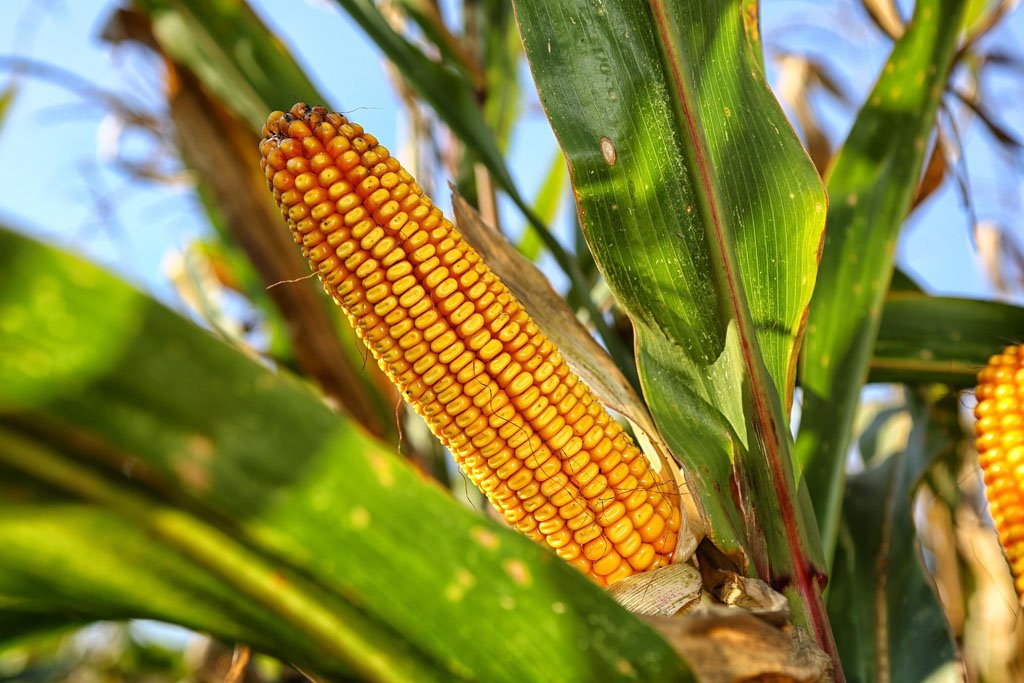
At a Glance
| Time to Harvest | 60-100 days, depending on variety |
|---|---|
| Sun | Full sun |
| Water | Consistent, especially during tasseling |
| Good For | Containers ✗ Raised Beds ✓ In-Ground Gardens ✓ |
Quick Reference
| Sun | Full sun (6-8 hours per day) |
|---|---|
| Spacing | 8-12 inches apart, in blocks of at least 4 rows |
| Planting Depth | 1 inch |
| Days to Harvest | 60-100 days, depending on variety and conditions |
| Watering | Consistent; critical during tasseling and ear fill |
| Soil pH | 5.8-7.0 |
| USDA Zones | Zones 2-11 outdoors; zone 1 needs a greenhouse or high tunnel |
| Average Yield | 1-2 ears per stalk |
Before You Plant…
Corn has one rule that matters more than any other:
- Plant in a block, not a row. Corn is wind-pollinated and needs neighbors nearby to fill out properly.
- Water heavily during tasseling. Drought stress at this stage causes gappy, poorly filled ears.
- Harvest the same day you plan to eat it. Corn’s sugars begin converting to starch the moment it’s picked.
Growing Timeline
| Week | What You’ll See |
|---|---|
| 1-2 | Seeds germinate. |
| 6-8 | Tasseling begins at the top of the stalk. |
| 9-10 | Silks appear and pollination occurs. |
| 12-14 | Ears are ready to harvest. |
Timing varies by variety, weather, and soil temperature at planting.
How to Plant Sweet Corn
Direct seed corn after soil has warmed to at least 60°F, planting one inch deep and spacing plants about 8-12 inches apart within blocks of short rows rather than a single long row.
Best Planting Time
| USDA Zone | Best Planting Time |
|---|---|
| 1 | Best grown in a greenhouse or high tunnel; the short outdoor season limits full-size ears. |
| 2 | Plant in early-to-mid June once soil has warmed, choosing a fast-maturing variety. |
| 3 | Plant late May through early June. |
| 4 | Plant late May through early June. |
| 5 | Plant late May through early June. |
| 6 | Plant mid-May. |
| 7 | Plant mid-May. |
| 8 | Plant April, or again in August in warm climates for a fall crop. |
| 9 | Plant April, or again in August in warm climates for a fall crop. |
| 10 | Plant February through March, avoiding the hottest summer months. |
| 11 | Plant February through March, avoiding the hottest summer months. |
Local frost dates and soil temperature matter more than zone alone. Aim for soil above 60°F before planting.
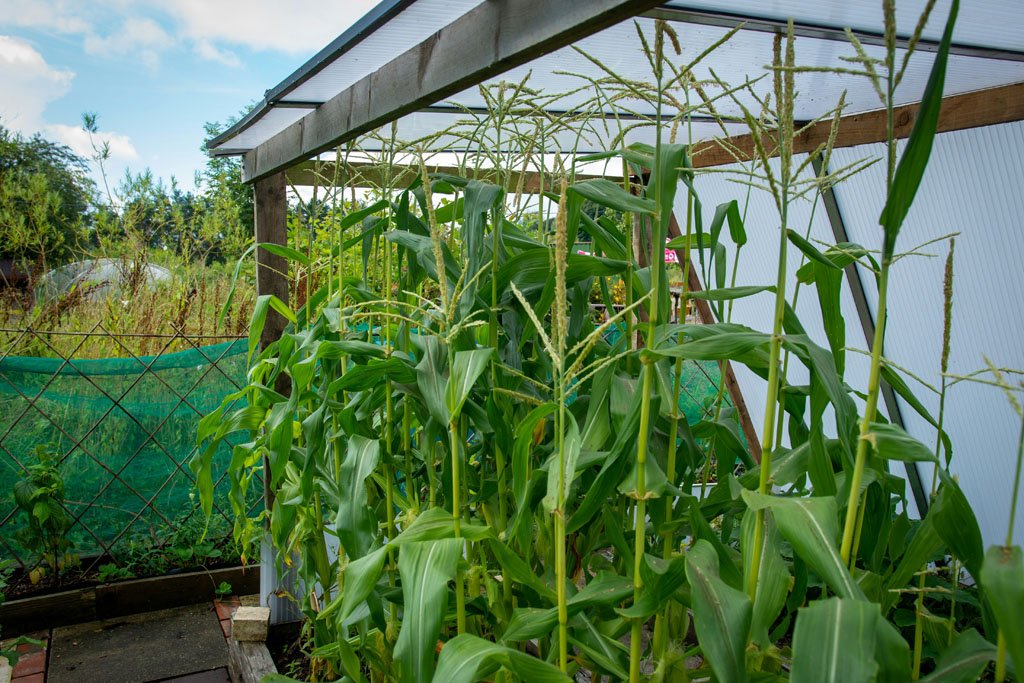
How to Care for Sweet Corn
Sweet corn needs full sun and well-drained soil rich in organic matter, with a pH between 5.8 and 7.0. Corn needs consistent moisture, especially once tassels and ears begin forming, since drought stress during this window significantly reduces kernel fill.
The University of Minnesota Extension covers block planting and variety selection in more detail.
Why Block Planting Matters
Corn is wind-pollinated rather than insect-pollinated, which is why it must be planted in blocks of at least four rows instead of a single long row. Pollen from the tassels needs to drift down and reach the silks of neighboring plants; a single row often results in poorly filled ears from inadequate pollen distribution.
Companion Planting
Beans and squash form the classic Three Sisters combination with corn, where beans fix nitrogen and climb the stalks while squash shades the soil. Avoid planting corn near tomatoes.
Can You Grow Sweet Corn in Containers?
Not well. Corn’s block-pollination needs and root system make it a poor fit for containers. Raised beds or in-ground plots work far better, with enough room for at least a 4×4 block of plants.
Harvesting
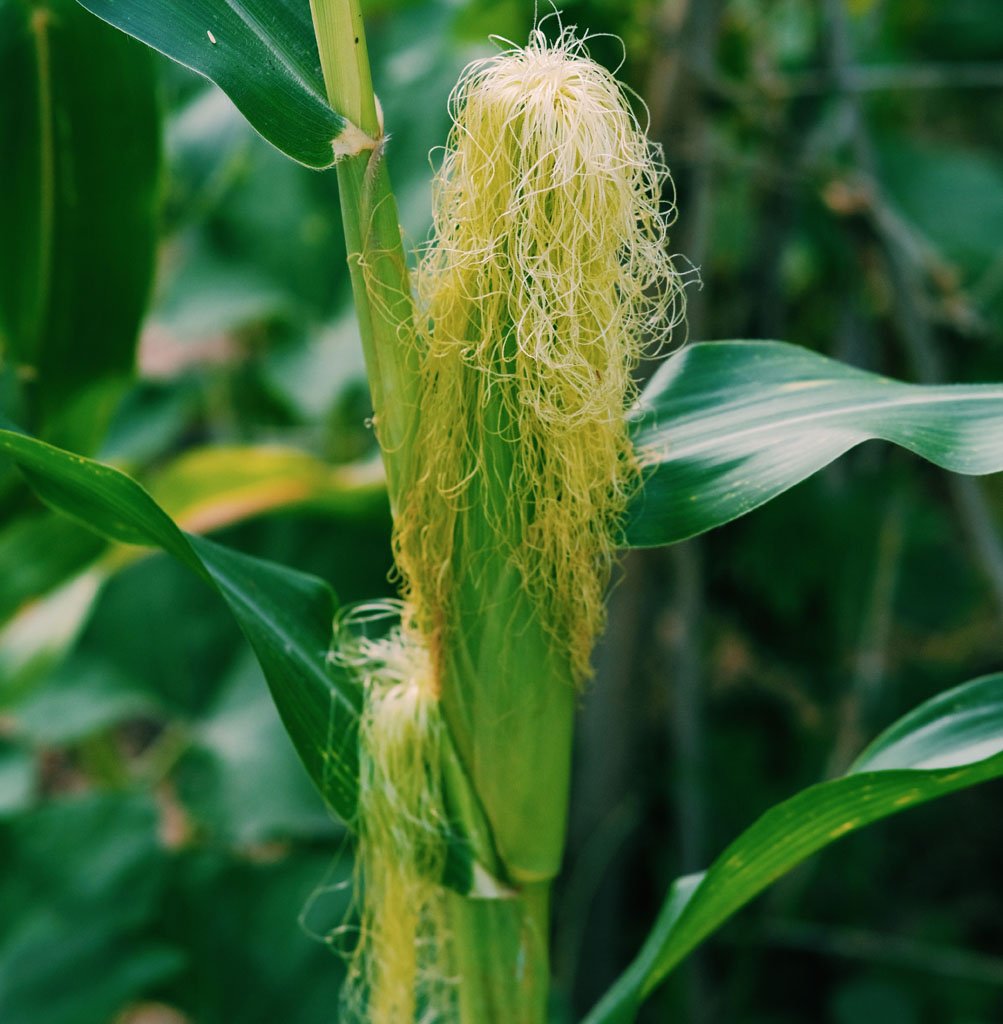
Corn is ready when silks turn brown and dry while the husk remains green, usually about three weeks after silks first appear. Check by peeling back husk and pressing a kernel; it should release a milky liquid when ripe.
Fresh corn is best eaten the same day it’s picked, since sugars begin converting to starch almost immediately. For longer storage, blanch briefly in boiling water, cool in ice water, and freeze on or off the cob.
Why Grow Sweet Corn?
Sweet corn provides fiber, vitamin C, and B vitamins like thiamin and folate, along with antioxidants such as lutein that support eye health. Homegrown corn is dramatically sweeter than store-bought since sugars start converting to starch the moment it’s picked.
Common Problems
Gaps in the kernels |
Corn earworm and raccoons |
Cross-pollination between varieties
Corn Earworm and Raccoons: Corn earworm and European corn borer are the most common pests, often noticed only when husking reveals a caterpillar near the ear’s tip. Raccoons can be a significant problem right as corn ripens; fencing or motion-activated deterrents help.
Gaps in the Kernels: Gaps usually indicate incomplete pollination, most often caused by planting in a single row instead of a block. Plant in blocks of at least four short rows to improve pollen distribution.
Cross-Pollination Between Varieties: Different sweet corn types can cross-pollinate if planted too close together, resulting in starchy, less flavorful kernels. Space different varieties at least 250 feet apart or stagger planting dates.
Common Beginner Mistakes
- Planting a single long row instead of a block.
- Planting different corn varieties too close together.
- Under-watering during tasseling, the most critical stage.
- Waiting too long to harvest once silks turn brown.
FAQs
Q: Why do my corn ears have gaps in the kernels?
A: Gaps usually indicate incomplete pollination; plant in blocks rather than single rows.
Q: Can sweet corn be grown in a small garden?
A: It’s possible with a compact block of at least 4×4 plants, though corn generally needs more space.
Q: How do I know when corn is ready to pick?
A: Brown, dry silks paired with a green husk and milky kernel liquid are the clearest signs.
Q: Can different corn varieties cross-pollinate?
A: Yes, plant different sweet corn types at least 250 feet apart or stagger planting dates.
Q: Why did raccoons get my corn the night before harvest?
A: Raccoons are highly attuned to corn ripeness; consider fencing or motion-activated deterrents as ears near maturity.
Best Varieties for Beginners
Best beginner variety: Golden Bantam, a shorter-season heirloom.
Best sweetness: Honey Select, extra-sweet and long-storing.
Best bicolor variety: Peaches and Cream.
Best classic white: Silver Queen.
Best for short seasons: Earlivee, one of the fastest-maturing sweet corn types.
Related Vegetables
If you’re planning a Three Sisters-style garden, check out our guides to growing cucumbers and growing potatoes.