
★★★☆☆ Difficulty
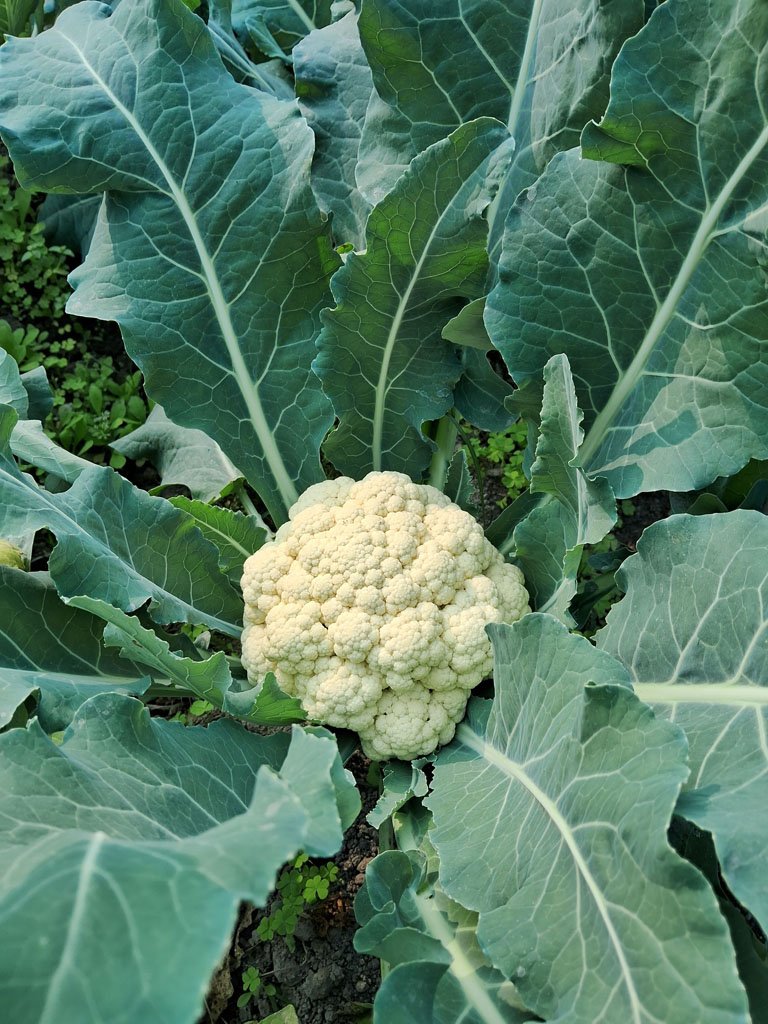
At a Glance
| Time to Harvest | 55-100 days, depending on variety |
|---|---|
| Sun | Full sun |
| Water | Keep soil consistently moist |
| Good For | Containers ✓ Raised Beds ✓ In-Ground Gardens ✓ |
Quick Reference
| Sun | Full sun (6+ hours per day) |
|---|---|
| Spacing | 18-24 inches apart |
| Planting Depth | 1/4-1/2 inch for seeds |
| Days to Harvest | 55-100 days, depending on variety and conditions |
| Watering | Keep evenly moist; drought can cause small or loose heads |
| Soil pH | 6.0-7.0 |
| USDA Zones | Grown as an annual in zones 3-10 |
| Average Yield | 1 main head per plant |
Before You Plant…
Cauliflower is less forgiving than many vegetables, but these three practices make the biggest difference:
- Keep the soil consistently moist. Even a short dry spell can interfere with head development.
- Time the crop for cool weather. Cauliflower grows best when the head matures before intense summer heat.
- Harvest at the right moment. Cut the head while it is firm and tightly packed, before the florets begin to separate.
Growing Timeline
| Week | What You’ll See |
|---|---|
| 1-2 | Seeds germinate and seedlings emerge. |
| 3-5 | Plants establish and develop large blue-green leaves. |
| 6-8 | A small central curd, or head, may begin to appear. |
| 8-12 | The head enlarges and becomes firm and compact. |
| 10-14 | Harvest before the head loosens, yellows, or begins flowering. |
Timing varies by variety, weather, and whether you begin with seeds or transplants.
How to Plant Cauliflower
Cauliflower performs best when it matures in cool weather. Start seeds indoors 4-6 weeks before transplanting, or buy sturdy young transplants. Harden seedlings off gradually before moving them into the garden. Space plants 18-24 inches apart in rich, well-drained soil.
Best Planting Time
| USDA Zone | Best Planting Time |
|---|---|
| 1 | Start seeds indoors in late spring. Transplant outdoors after the last hard frost for a summer harvest. |
| 2 | Start indoors in late spring and transplant after frost danger has passed. |
| 3 | Plant in spring after the last frost or midsummer for a fall crop. |
| 4 | Plant in spring after the last frost or midsummer for a fall crop. |
| 5 | Plant in early spring or midsummer for a fall harvest. |
| 6 | Plant in early spring or midsummer for a fall harvest. |
| 7 | Plant in late winter/early spring or late summer for a fall crop. |
| 8 | Plant in late winter/early spring or late summer for a fall crop. |
| 9 | Plant from fall through late winter. |
| 10 | Plant from fall through winter for spring harvest. |
| 11 | Grow during the coolest months of the year, from late fall through early spring. |
Local frost dates and summer temperatures matter more than zone alone. Aim for steady growth during temperatures around 50-70°F.
How to Care for Cauliflower
Cauliflower needs steady, uninterrupted growth. Keep the soil evenly moist, add compost before planting, and apply mulch to help retain moisture and regulate soil temperature. Plants grow best in fertile soil with a pH between 6.0 and 7.0.
The University of Minnesota Extension offers additional guidance on timing spring and fall plantings.
Blanching White Cauliflower
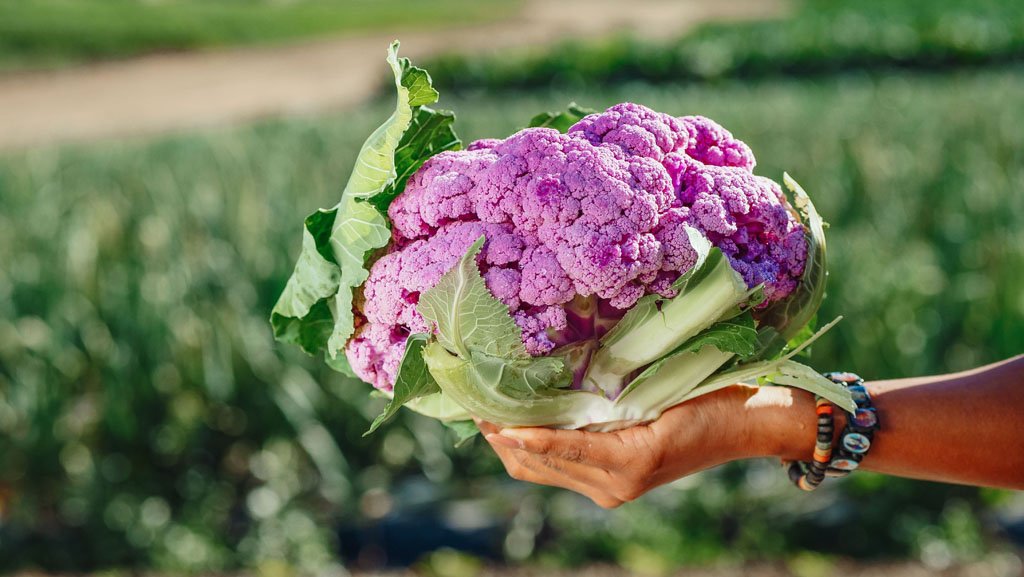
Traditional white varieties may benefit from blanching. When the head is about 2-3 inches across, gently fold the outer leaves over it and secure them loosely. This protects the curd from sunlight and helps it remain white. Self-blanching varieties and colored cauliflower, including purple, orange, and green types, usually do not require this step.
Companion Planting
Cauliflower can grow well near celery, onions, and beets. Avoid crowding it beside large, nutrient-hungry crops. Tomatoes and strawberries are often kept separate because they can compete for space, moisture, and nutrients.
Can You Grow Cauliflower in Containers?
Yes. Use one plant per container and choose a pot that holds at least 5 gallons, with a depth and width of about 12-18 inches. Fill it with quality potting mix, provide full sun, and check moisture frequently because containers dry out faster than garden beds.
Harvesting
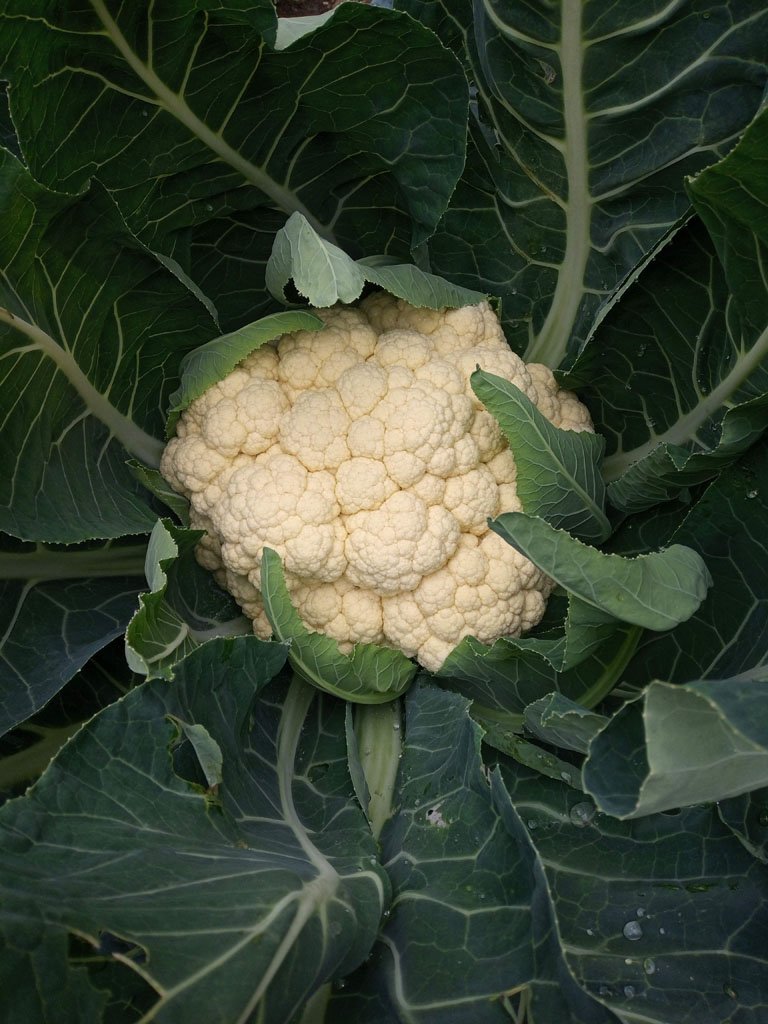
Harvest when the head is firm, compact, and large enough for your needs, usually around 6-8 inches across. Do not wait for the florets to separate or develop a grainy, rice-like appearance. Use a sharp knife to cut the stem below the head, leaving several wrapper leaves attached to protect it after harvest.
Fresh cauliflower keeps for about one week in the refrigerator. For longer storage, cut it into florets, blanch briefly in boiling water, cool it in ice water, and freeze.
Why Grow Cauliflower?
Cauliflower provides vitamin C, vitamin K, fiber, folate, and choline while remaining naturally low in calories. It is also versatile in the kitchen and can be roasted, steamed, mashed, added to soups, or used in place of rice.
Common Problems
Small or loose heads |
Cabbage worms and aphids |
Yellowing heads and blanching
Cabbage Worms and Aphids: Inspect the undersides of leaves regularly. Floating row covers can prevent moths from laying eggs, while a strong stream of water can dislodge aphids. Remove badly infested leaves and handpick visible caterpillars.
Yellowing Heads and Blanching: Sun exposure can yellow the heads of traditional white varieties. Fold the outer leaves over the curd once it begins forming. Self-blanching and colored varieties do not normally need this treatment.
Common Beginner Mistakes
- Allowing the soil to dry out during head formation.
- Planting too late and forcing the crop to mature in hot weather.
- Overcrowding plants, which reduces airflow and limits head size.
- Waiting too long to harvest after the head becomes firm and compact.
FAQs
Q: Why is my cauliflower head small and loose instead of firm?
A: This is often called buttoning and is commonly caused by heat stress, inconsistent watering, transplant stress, or interrupted growth.
Q: Do all cauliflower varieties need blanching?
A: No. Traditional white varieties may need their leaves folded over the head, while self-blanching and colored varieties generally do not.
Q: Can cauliflower be grown in containers?
A: Yes. Use a container of at least 5 gallons, plant only one cauliflower per pot, and keep the soil consistently moist.
Q: Why did my cauliflower head turn yellow?
A: White heads can yellow from sun exposure. Cover the developing curd with its outer leaves, unless you are growing a self-blanching variety.
Q: How long does cauliflower take to mature?
A: Most varieties mature in about 55-100 days, depending on whether the count begins at seeding or transplanting, as well as the variety and growing conditions.
Best Varieties for Beginners
Best beginner variety: Snow Crown, a dependable and relatively fast-maturing choice.
Fast-maturing choice: Early Snowball, suitable for gardeners with a shorter cool season.
Best colorful variety: Cheddar, which produces bright orange heads.
Best Romanesco type: Romanesco, known for its striking spiral-shaped green head.
Best self-blanching choice: Amazing, whose leaves naturally curl around the developing white head.
Related Vegetables
If you’re planning a cool-season garden, check out our guides to growing carrots and growing onions.