★★☆☆☆ Difficulty
At a Glance
| Time to Harvest | 100-120 days |
|---|---|
| Sun | Full sun |
| Water | About 1 inch per week, moist but not waterlogged |
| Good For | Containers ✓ Raised Beds ✓ In-Ground Gardens ✓ |
Quick Reference
| Sun | Full sun (6+ hours per day) |
|---|---|
| Spacing | 4-6 inches apart, rows 12-18 inches apart |
| Planting Depth | 1 inch for sets or transplants |
| Days to Harvest | 100-120 days after planting |
| Watering | About 1 inch per week; reduce as tops begin to fall over |
| Soil pH | 6.0-6.8 |
| USDA Zones | Grown as an annual in zones 1-10 |
| Average Yield | 1 bulb per set or transplant |
Before You Plant…
Growing onions successfully comes down to three things:
- Choose the right day-length type. Long-day, short-day, or day-neutral varieties matter more than any other factor.
- Reduce nitrogen as bulbs form. Too much late feeding delays the shift from leaves to bulb growth.
- Cure fully before storing. A proper cure is what makes months of storage possible.
Growing Timeline
| Week | What You’ll See |
|---|---|
| 1-2 | Sets or transplants establish roots. |
| 4-8 | Green tops grow steadily. |
| 10-14 | Bulbs begin swelling underground. |
| 14-17 | Tops yellow and fall over; bulbs are ready to harvest. |
Timing for growing onions varies by variety, day-length type, and regional climate.
How to Plant Onions
Plant sets or transplants in early spring, about 1 inch deep and 4-6 inches apart, in rows spaced 12-18 inches apart to give bulbs room to expand as they mature through the season.
Best Planting Time
Growing onions successfully starts with picking the right window for your zone:
| USDA Zone | Best Planting Time |
|---|---|
| 1 | Plant in late May through early June, once soil has thawed. |
| 2 | Plant in mid-to-late May. |
| 3 | Plant in April, as soon as soil can be worked. |
| 4 | Plant in April, as soon as soil can be worked. |
| 5 | Plant in April, as soon as soil can be worked. |
| 6 | Plant in March through April. |
| 7 | Plant in March through April. |
| 8 | Plant in February through March, or fall for overwintering varieties. |
| 9 | Plant in February through March, or fall for overwintering varieties. |
| 10 | Plant in fall through winter, avoiding summer heat. |
| 11 | Plant in fall through winter, avoiding summer heat. |
Local frost dates and day-length matter more than zone alone. Choose long-day varieties in northern latitudes and short-day varieties in southern ones.
How to Care for Onions
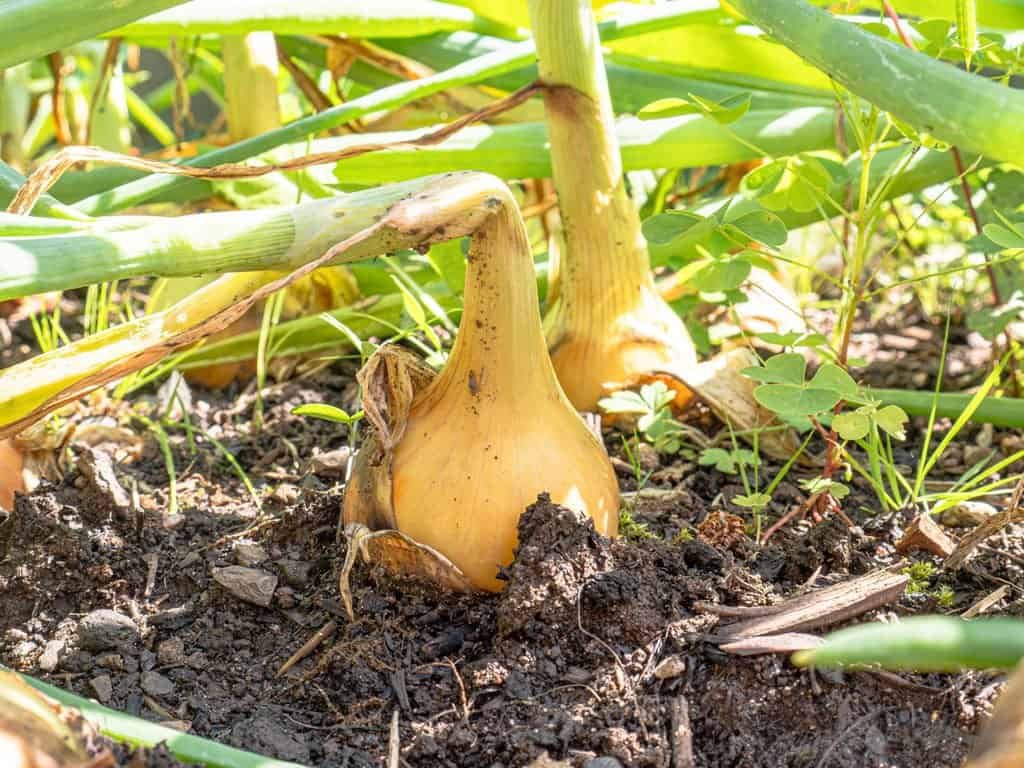
Growing onions well starts with full sun and fertile, well-draining soil with a pH of 6.0-6.8. Choosing day-length appropriate varieties based on your latitude is essential, since the wrong type for your region will struggle to bulb properly regardless of care.
Ohio State University Extension has a solid regional guide on day-length varieties and curing.
Watering and Feeding
Water regularly, about 1 inch per week, keeping soil moist but never waterlogged. Feed with a balanced fertilizer early in the season, then reduce nitrogen as bulbs begin to form to help the plant shift energy from leaves to bulb development.
Companion Planting
Carrots, lettuce, and beets pair well when growing onions, and the onion’s strong scent can help deter some pests from nearby crops. Avoid planting onions near beans or peas, which can stunt each other’s growth.
Can You Grow Onions in Containers?
Yes, growing onions in containers works well as long as the pot is at least 8-10 inches deep with good drainage. Full sun and consistent watering matter just as much in a container as they do in the ground.
Harvesting
Harvest onions when the tops yellow and fall over on their own, typically 100-120 days after planting. Cure bulbs in a warm, dry, airy spot for 2-3 weeks before storing to toughen the outer skins.
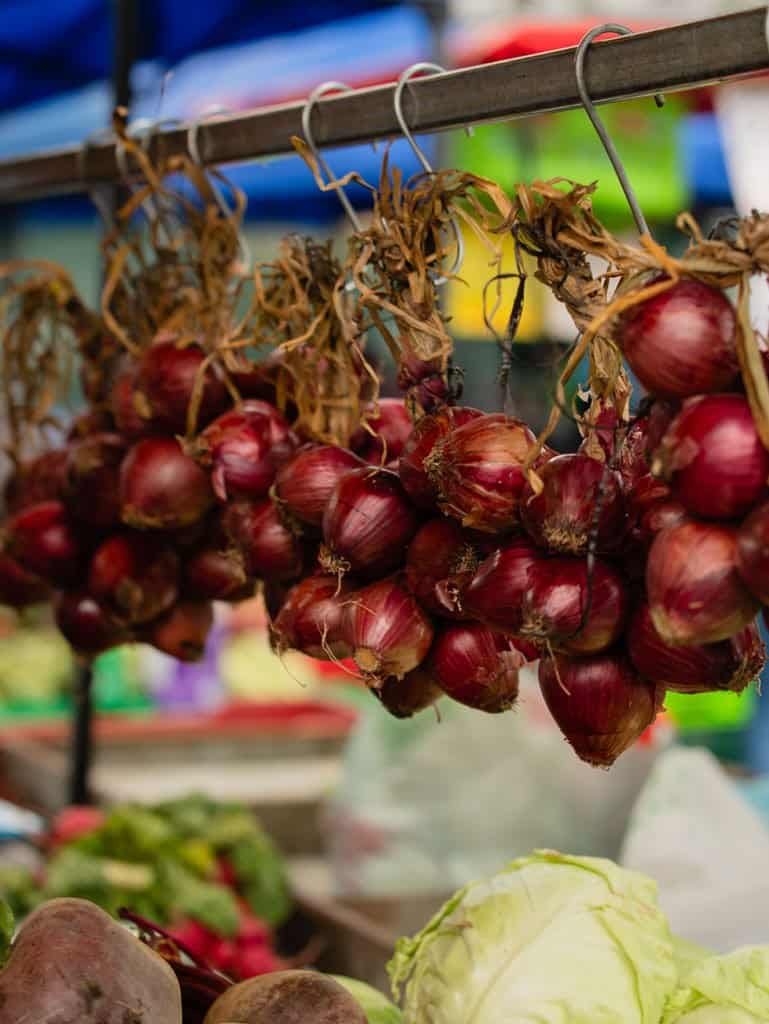
Once properly cured, store onions in a cool, dry, well-ventilated place, such as a mesh bag or braided rope, hung out of direct sunlight. Properly cured onions can last 3-6 months or longer in the right conditions.
Why Grow Onions?
Growing onions gives you access to sweeter, milder varieties not always easy to find commercially, along with the satisfaction of long-storing bulbs that carry a household through much of the year. Onions contain antioxidants like quercetin, along with vitamin C and small amounts of dietary fiber.
Common Problems
Bolting early |
Onion maggots and thrips |
Growing from kitchen scraps
Onion Maggots and Thrips: These are common pests to watch for. Keep beds weed-free throughout the season, since onions have shallow roots and compete poorly against weeds.
Bolting Early: Premature flowering is usually triggered by temperature swings or cold stress earlier in the season, which signals the plant to flower before bulbing fully. Bolted onions still store poorly and are best used fresh.
Growing From Kitchen Scraps: Regrowing green tops from scraps works for scallions, but for full bulbs, sets or transplants give far better results.
Common Beginner Mistakes
These mistakes come up again and again when growing onions for the first time:
- Planting the wrong day-length type for your latitude.
- Letting weeds compete with shallow onion roots.
- Skipping the curing step before storage.
- Continuing heavy nitrogen feeding after bulbs begin forming.
FAQs
Q: How do I know when onions are ready to harvest?
A: When the tops yellow and fall over on their own, the bulbs are ready to be dug up and cured.
Q: Why did my onions bolt (flower) early?
A: This is usually triggered by temperature swings or cold stress earlier in the season, which signals the plant to flower prematurely.
Q: Can onions be grown from kitchen scraps?
A: Regrowing green tops from scraps works for scallions, but for full bulbs, sets or transplants give far better results.
Q: Can onions be grown in containers?
A: Yes, growing onions in a container at least 8-10 inches deep with good drainage works well.
Q: How long do homegrown onions store?
A: Properly cured onions can last 3-6 months or longer in a cool, dry, well-ventilated space.
Best Varieties for Beginners
Choosing the right variety makes growing onions easier:
Best beginner variety: Yellow onions, the versatile kitchen standard.
Best for salads: Red onions, with a milder bite and vivid color.
Best for fresh eating: Vidalia or Walla Walla, prized for low sulfur content.
Best for Southwestern cooking: White onions, with a sharper flavor.
Related Vegetables
Looking to fill out the rest of your garden? Check out our guides to growing cucumbers and growing potatoes.