★☆☆☆☆ Difficulty
At a Glance
| Time to Harvest | 50-60 days; baby leaves sooner |
|---|---|
| Sun | Full sun to partial shade |
| Water | Consistent moisture |
| Good For | Containers ✓ Raised Beds ✓ In-Ground Gardens ✓ |
Quick Reference
| Sun | Full sun in spring/fall; tolerates partial shade in summer |
|---|---|
| Spacing | 4-6 inches apart, rows 18-30 inches apart |
| Planting Depth | 1/2 inch |
| Days to Harvest | 50-60 days, though baby leaves can be picked much sooner |
| Watering | Consistent moisture supports continuous leaf production |
| Soil pH | 6.0-7.0 |
| USDA Zones | Grown as an annual in zones 1-10 |
| Average Yield | Continuous harvest from spring through fall |
Before You Plant…
Growing Swiss chard is one of the more forgiving crops in the garden if you remember three things:
- Start a bit later than spinach. Cold temperatures can trigger chard to bolt prematurely.
- Harvest individual leaves. This keeps the plant producing all season instead of just once.
- Watch for lookalike weeds. Lamb’s quarters and pigweed seedlings resemble young chard.
Growing Timeline
| Week | What You’ll See |
|---|---|
| 1-2 | Seeds germinate. |
| 3 | True leaves appear. |
| 5-6 | Leaves reach a usable size for a first harvest. |
| 8+ | Continuous harvest through spring, summer, and fall. |
Timing for growing Swiss chard varies by whether you start indoors or direct seed.
How to Plant Swiss Chard
For summer crops, start seed indoors in early April, about four weeks before transplanting, or direct seed once the soil is workable. For fall crops, sow seed indoors in June. Transplant four to six inches apart, in rows 18 to 30 inches apart.
Best Planting Time
Growing Swiss chard successfully starts with picking the right window for your zone:
| USDA Zone | Best Planting Time |
|---|---|
| 1 | Sow in early-to-mid June, once soil has warmed. |
| 2 | Sow in late May through early June. |
| 3 | Sow in April through May. |
| 4 | Sow in April through May. |
| 5 | Sow in mid-to-late April. |
| 6 | Sow in April, and again in June for fall. |
| 7 | Sow in April, and again in June for fall. |
| 8 | Sow in March, and September for fall. |
| 9 | Sow in March, and September for fall. |
| 10 | Grow nearly year-round, avoiding only the hottest weeks of summer. |
| 11 | Grow nearly year-round, avoiding only the hottest weeks of summer. |
Local frost dates matter more than zone alone. Start chard a bit later than spinach, since cold temperatures can trigger bolting.
How to Care for Swiss Chard
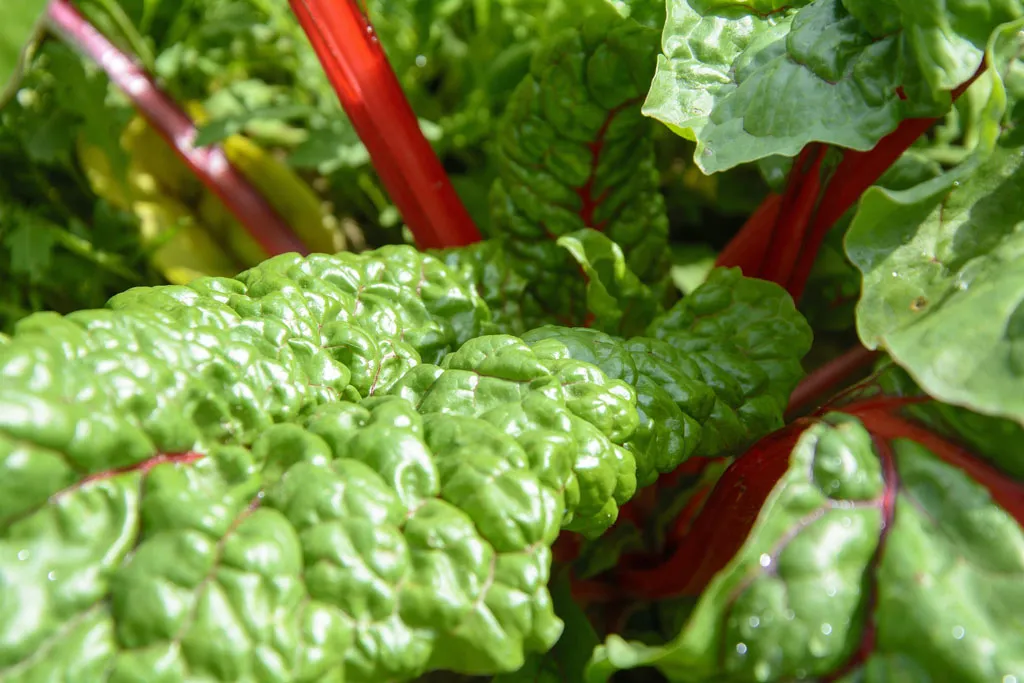
Growing Swiss chard well starts with soil that can be somewhat more acidic than spinach prefers, as low as pH 6. Use a floating row cover to protect young seedlings from cold weather and insects, switching to a lightweight mesh cover once the weather warms.
The University of Minnesota Extension covers spinach and Swiss chard together in a detailed growing guide.
Telling Chard From Weed Seedlings
Lamb’s quarters and pigweed are two common weeds that resemble young chard, since both produce seedlings with reddish leaves. The key difference: these weeds grow a vertical stem, while chard only grows leaves from the crown at ground level.
Companion Planting
Onions, cabbage family crops, and beans pair well with chard, since it is closely related to beets and shares similar companions. Avoid crowding chard near tall plants that could shade it out.
Can You Grow Swiss Chard in Containers?
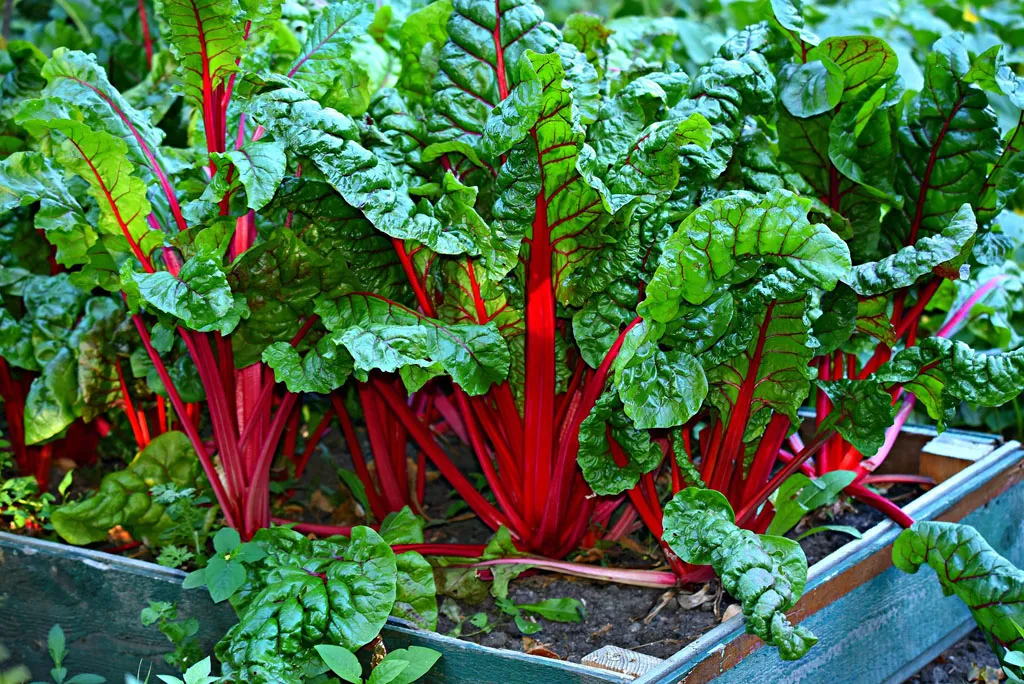
Yes. Swiss chard does well in a container at least 8-10 inches deep with consistent moisture. Its colorful stems make it as attractive as it is productive, even in a decorative pot.
Harvesting
In spring, harvest single leaves as soon as they reach a usable size by pulling them from the plant. Picking individual leaves at the baby stage allows for multiple harvests over the season, since the plant keeps producing new growth from the crown.
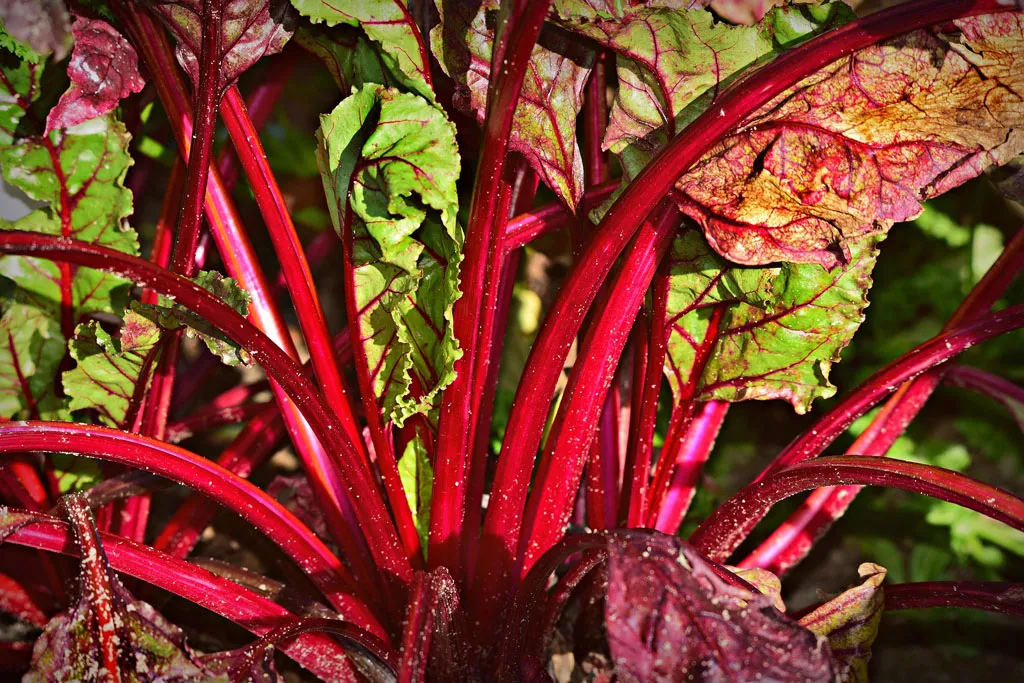
Fresh Swiss chard keeps about one week in the refrigerator, stored loosely in a perforated bag. For longer storage, blanch briefly and freeze, which preserves it well for cooked dishes throughout the year.
Why Grow Swiss Chard?
Swiss chard gives you a productive, colorful green that yields tasty leaves from spring through fall, unlike its temperamental cousin spinach. The upright, ruffled leaves range from green and white to pink, red, orange, and yellow, and can be used raw in salads or cooked just like beet greens.
Common Problems
Flea beetles and leaf miners |
Confusing chard with weeds |
Bolting in cold snaps
Flea Beetles and Leaf Miners: A lightweight mesh cover continues to protect plants from these pests once temperatures have warmed enough to remove a heavier row cover.
Confusing Chard With Weeds: Lamb’s quarters and pigweed seedlings look similar to young chard. Look for a vertical stem, which chard doesn’t produce, to tell weeds apart early.
Bolting in Cold Snaps: The plant perceives a “winter” that signals it to flower prematurely. Starting chard slightly later than spinach helps avoid this cold-triggered bolting.
Common Beginner Mistakes
These mistakes come up again and again when growing Swiss chard for the first time:
- Planting too early in cold soil, triggering bolting.
- Confusing young seedlings with lamb’s quarters or pigweed.
- Harvesting the whole plant instead of individual leaves.
- Letting leaves grow oversized before picking.
FAQs
Q: Is Swiss chard related to beets?
A: Yes, chard is the same species as beets, grown for its leaves rather than a large root.
Q: Can Swiss chard be grown in containers?
A: Yes, in a container at least 8-10 inches deep with consistent moisture.
Q: Why did my chard bolt so early?
A: Cold exposure can trigger bolting; start chard slightly later than spinach to avoid this.
Q: How many times can I harvest the same plant?
A: Many times, by picking individual leaves and leaving the crown to keep producing.
Q: Does Swiss chard survive frost?
A: Yes, it tolerates light frost well and often produces into late fall.
Best Varieties for Beginners
Choosing the right variety makes growing Swiss chard even easier:
Best beginner variety: Fordhook Giant, a reliable, heavy-producing classic.
Best for color: Bright Lights, with stems in red, pink, orange, and yellow.
Best for containers: Bright Yellow, compact with striking yellow stems.
Best cold tolerance: Rhubarb Chard, known for deep red stems and good hardiness.
Related Vegetables
If you’re planning a cool-season garden, check out our guides to growing spinach and growing beets.