★★☆☆☆ Difficulty
At a Glance
| Time to Harvest | 45-50 days |
|---|---|
| Sun | Full sun to partial shade |
| Water | Consistent moisture |
| Good For | Containers ✓ Raised Beds ✓ In-Ground Gardens ✓ |
Quick Reference
| Sun | Full sun to part shade |
|---|---|
| Spacing | 6-12 inches apart, depending on variety |
| Planting Depth | 1/4-1/2 inch |
| Days to Harvest | 45-50 days |
| Watering | Consistent moisture; well-drained soil |
| Soil pH | 6.0-7.5 |
| USDA Zones | Grown as an annual in zones 1-10 |
| Average Yield | 1 head per plant, or repeated leaf harvests |
Before You Plant…
Growing bok choy is manageable once you understand its sensitivity to cold shock:
- Wait until after the last frost to transplant. Cold exposure can trigger premature bolting.
- Plant it as a fall crop when possible. Bok choy generally performs best in cooling, not warming, temperatures.
- Rotate away from other cole crops. Avoid areas where cabbage or Brussels sprouts grew in the past four years.
Growing Timeline
| Week | What You’ll See |
|---|---|
| 1 | Seeds germinate within 7-10 days. |
| 3-4 | True leaves develop; transplant if started indoors. |
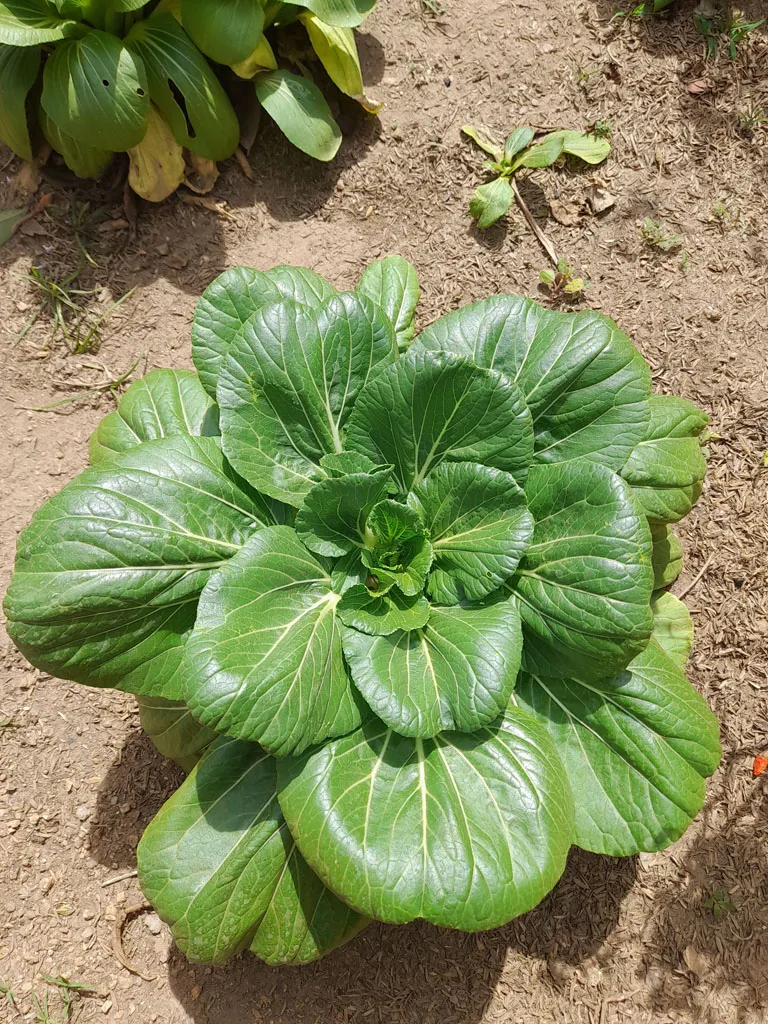
| 5-6 | Plant fills out with a thick, upright clump of leaves. |
| 6-7 | Head reaches harvestable size. |
Timing for growing bok choy varies by variety and whether it’s planted for spring or fall harvest.
How to Plant Bok Choy
Start transplants indoors four to six weeks before your last frost date, since germination takes 7-10 days. Wait until after the last frost to transplant outdoors, since exposure to frost or a week of nighttime temperatures below 50°F can cause premature bolting.
Best Planting Time
Growing bok choy successfully starts with picking the right window for your zone:
| USDA Zone | Best Planting Time |
|---|---|
| 1 | Start indoors in April, transplant after the last frost, typically mid-June. |
| 2 | Start indoors in April, transplant after frost danger passes, typically early June. |
| 3 | Direct seed in July for a reliable fall crop. |
| 4 | Direct seed in July for a reliable fall crop. |
| 5 | Direct seed in July for a reliable fall crop. |
| 6 | Direct seed in July for fall harvest. |
| 7 | Direct seed in July for fall harvest. |
| 8 | Direct seed in August through September. |
| 9 | Direct seed in August through September. |
| 10 | Grow fall through spring, avoiding summer heat. |
| 11 | Grow fall through spring, avoiding summer heat. |
Local frost dates matter more than zone alone. Bok choy is grown as a fall crop in most regions since it tends to bolt in spring heat.
How to Care for Bok Choy
Growing bok choy well starts with well-drained yet moisture-retentive, fertile soil with a pH between 6.0 and 7.5. Improve soil with well-rotted manure or compost, and keep it absorbing water and nutrients steadily throughout growth.
The University of Minnesota Extension covers Chinese cabbage and bok choy together in a detailed growing guide.
Why Fall Plantings Work Best
Bok choy is a fall crop in most climates since young plants exposed to frost or a week of cool nights below 50°F may bolt prematurely, ruining the crop before it reaches full size. Timing plantings for cooling rather than warming temperatures avoids this problem almost entirely.
Companion Planting
Onions, herbs, and beets pair well with bok choy, helping to make efficient use of garden space. Avoid planting bok choy where cabbage, broccoli, cauliflower, turnips, rutabaga, or Brussels sprouts have grown in the past four years.
Can You Grow Bok Choy in Containers?
Yes. Bok choy does well in a container at least 8-10 inches deep with consistent moisture. Its compact size makes it especially well-suited to patio or balcony growing.
Harvesting
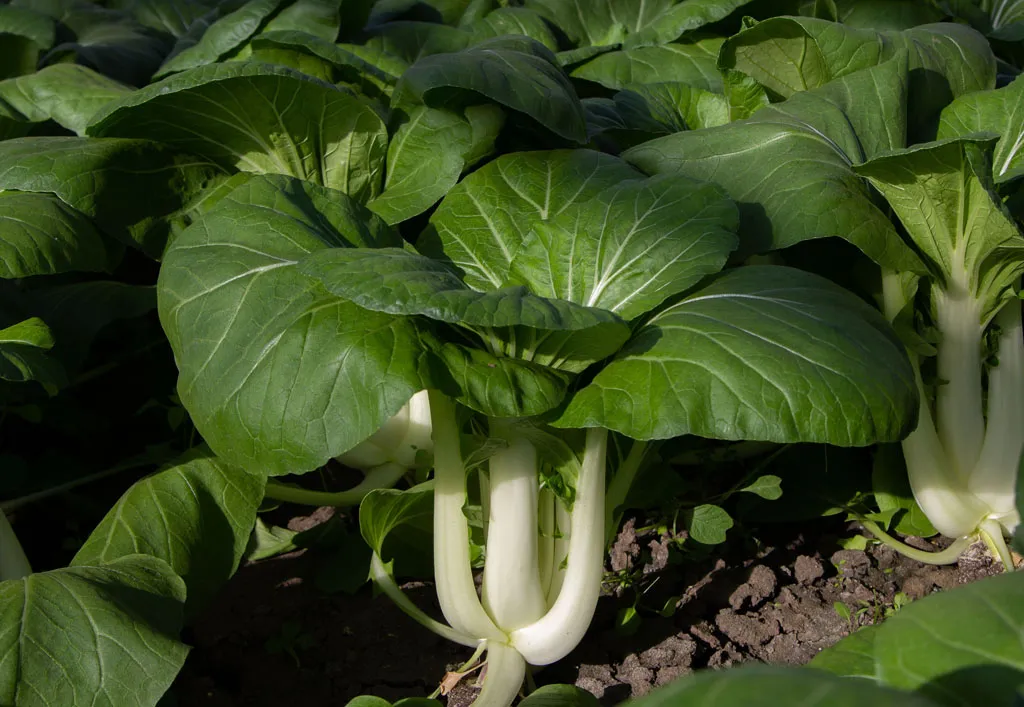
You can harvest bok choy a few leaves at a time rather than waiting for the whole head to mature, picking the oldest, largest outer leaves first. Most gardeners wait for the head to reach mature size, then cut it off just above the base.
Fresh bok choy keeps about one week in the refrigerator, stored loosely in a perforated bag. It’s best used relatively soon after harvest, since its tender leaves don’t hold up as long as sturdier greens like kale.
Why Grow Bok Choy?
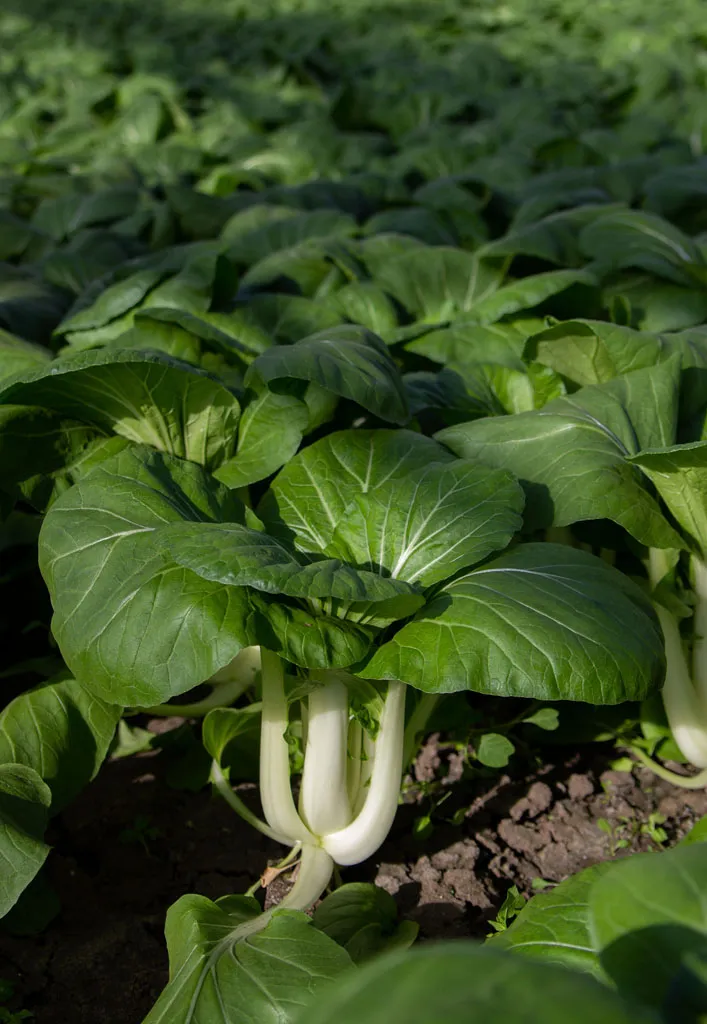
Growing bok choy brings a crisp, mild Asian green to the garden that’s been cultivated for more than a thousand years. Each plant forms an upright clump of dark green leaves with thick, crunchy white or light green stalks, perfect for stir-fries, soups, and salads.
Common Problems
Bolting before harvest |
Flea beetles and cabbage worms |
Loose, underdeveloped heads
Flea Beetles and Cabbage Worms: These are common pests on young plants. Row covers help protect seedlings, especially early in the season.
Bolting Before Harvest: Cold exposure or a stretch of cool nights below 50°F often triggers premature flowering. Plant as a fall crop to avoid this, since spring plantings are more vulnerable.
Loose, Underdeveloped Heads: This usually means the plant needs more time; if leaves feel loose, allow additional growing time before harvest.
Common Beginner Mistakes
These mistakes come up again and again when growing bok choy for the first time:
- Transplanting too early, before frost danger has fully passed.
- Planting as a spring-only crop instead of favoring fall.
- Harvesting before the head reaches a firm, dense feel.
- Skipping crop rotation with other brassicas.
FAQs
Q: Why did my bok choy bolt before it was ready?
A: Cold exposure or cool nights below 50°F often trigger premature bolting; plant as a fall crop to avoid this.
Q: Can bok choy be grown in containers?
A: Yes, in a container at least 8-10 inches deep with consistent moisture.
Q: Is bok choy the same as Chinese cabbage?
A: They’re related but different; bok choy has thick white stalks and loose leaves, while Chinese cabbage forms a dense, barrel-shaped head.
Q: How do I know when bok choy is ready to harvest?
A: Heads should feel firm and dense; if they feel loose, give them more time.
Q: Can I harvest bok choy leaf by leaf?
A: Yes, picking outer leaves allows for a longer harvest instead of removing the whole head at once.
Best Varieties for Beginners
Choosing the right variety makes growing bok choy easier:
Best beginner variety: Joi Choi, a reliable, vigorous hybrid.
Best for containers: Baby Bok Choy, compact and fast-maturing.
Best cold tolerance: Win-Win Choy, bred for reliable fall performance.
Best for stir-fries: Shanghai Green, prized for its tender, spoon-shaped leaves.
Related Vegetables
If you’re planning a fall garden, check out our guides to growing cabbage and growing kale.