★★★☆☆ Difficulty
At a Glance
| Time to Harvest | 2-3 years to first harvest, then annually for 15+ years |
|---|---|
| Sun | Full sun |
| Water | Good soil moisture, especially at planting |
| Good For | Containers ✗ Raised Beds ✓ In-Ground Gardens ✓ |
Quick Reference
| Sun | Full sun, at least 8 hours per day |
|---|---|
| Spacing | 15-18 inches apart, rows 4-5 feet apart |
| Planting Depth | 6-8 inch trench, filled in gradually |
| Days to Harvest | 2-3 years after planting crowns; annual harvest for 15+ years after |
| Watering | Consistent moisture, particularly important the planting year |
| Soil pH | 6.5-7.0 |
| USDA Zones | Grown as a perennial in zones 2-9 |
| Average Yield | Half a pound of spears per plant once established |
Before You Plant…
Growing asparagus is a long-term investment, so getting the site right matters more than anything:
- Choose the spot carefully. Asparagus can produce for 15 years or more, so pick a permanent location.
- Be patient the first two years. Don’t harvest at all the first season, and only lightly the second.
- Let ferns grow after harvest. The feathery foliage recharges the crown for next year’s spears.
Growing Timeline
| Stage | What You’ll See |
|---|---|
| Year 1 | Crowns establish roots; small shoots may appear but should not be harvested. |
| Year 2 | Light harvest possible for 3-4 weeks; then let ferns grow. |
| Year 3+ | Full harvest season, 6-8 weeks each spring. |
| Late June | Harvest ends; spears grow into ferns for the rest of the season. |
Timing for growing asparagus varies by whether you start from seed or one-year-old crowns.
How to Plant Asparagus
Plant one-year-old crowns in a trench 6-8 inches deep and 10-12 inches wide, spreading roots out over a small mound of soil at the bottom. Cover with about 2 inches of soil initially, then gradually fill in the trench as shoots grow throughout the first season.
Best Planting Time
Growing asparagus successfully starts with picking the right window for your zone:
| USDA Zone | Best Planting Time |
|---|---|
| 1 | Plant crowns in early June once soil has thawed and warmed. |
| 2 | Plant crowns in late May through early June. |
| 3 | Plant crowns in April through May. |
| 4 | Plant crowns in April through May. |
| 5 | Plant crowns in April. |
| 6 | Plant crowns in March through April. |
| 7 | Plant crowns in March through April. |
| 8 | Plant crowns in February through March. |
| 9 | Plant crowns in February through March. |
| 10 | Plant crowns in fall or winter, avoiding summer heat. |
| 11 | Plant crowns in fall or winter, avoiding summer heat. |
Local frost dates matter less than soil workability. Order crowns 3-6 months ahead, since they must be planted while still dormant.
How to Care for Asparagus
Growing asparagus well starts with medium-textured, well-drained soil with a pH between 6.5 and 7.0, in full sun. Test soil before planting and amend based on results, since this long-lived perennial is difficult to correct once established.
The University of Minnesota Extension provides a detailed guide to planting and long-term care.
Why Weed Control Matters Most Early On
Newly planted crowns have very small root systems, so even a few weeds nearby can slow growth significantly and reduce spear production for years to come. Good weed management in the first two seasons is the single biggest factor in establishing a high-yielding bed.
Companion Planting
Tomatoes, parsley, and basil pair well when growing asparagus, since tomatoes are said to repel asparagus beetles. Avoid planting asparagus near onions or garlic, which can inhibit its growth.
Can You Grow Asparagus in Containers?
Not really. Asparagus develops an extensive root system that can spread 5-6 feet in diameter and grow many feet deep, making it a poor fit for containers. In-ground beds or large raised beds are strongly preferred.
Harvesting
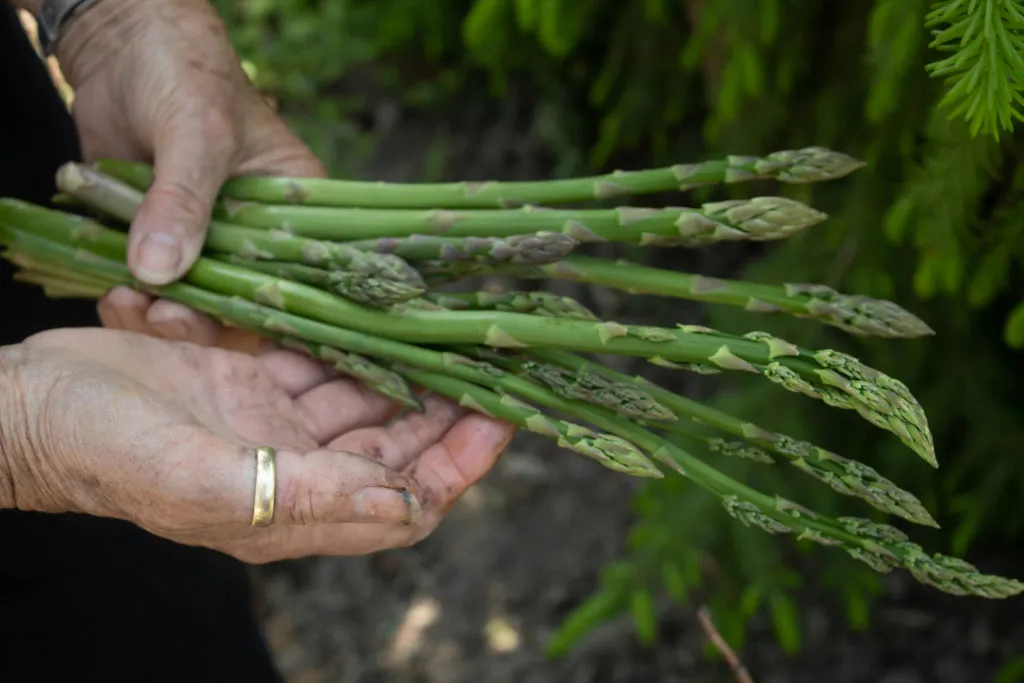
Begin harvest two years after planting crowns, snapping or cutting spears 6-8 inches tall just below the soil surface. Harvest daily during peak season, since spears can grow up to 2 inches per day. Stop harvesting by late June to let remaining spears grow into ferns.
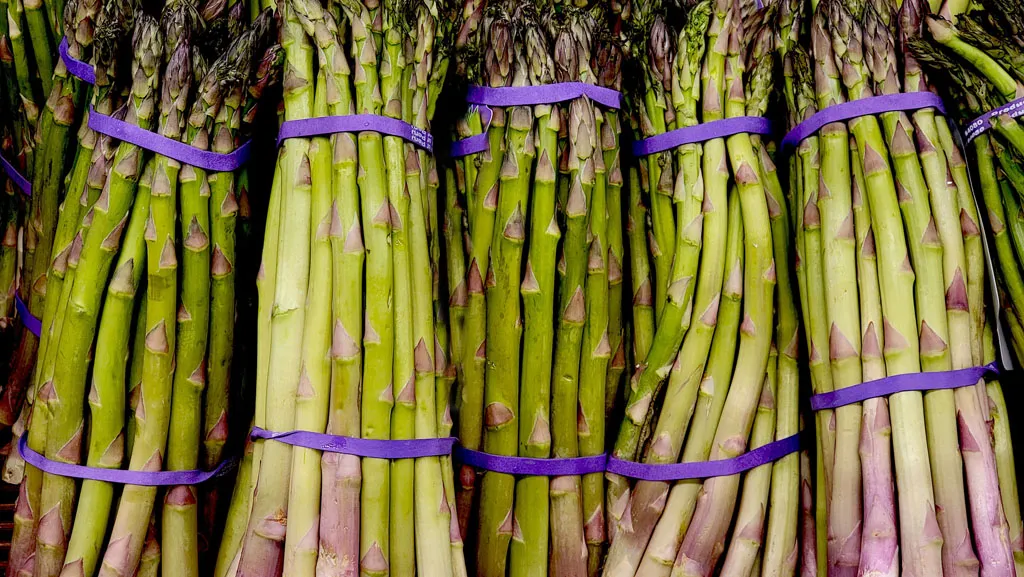
Fresh asparagus is best used within a few days, stored upright in a jar of water in the refrigerator like cut flowers, or wrapped in a damp paper towel. Asparagus also freezes well after a quick blanch, preserving both flavor and texture.
Why Grow Asparagus?
Growing asparagus rewards patience with one of the earliest harvests of spring, often ready weeks before most other vegetables. It’s a good source of vitamin K, folate, and fiber, and once established, a single bed can keep producing for 15 years or longer with minimal replanting effort.
Common Problems
Asparagus beetles |
Crown rot |
Thin, weak spears
Asparagus Beetles: These feed on spear tips and buds as spears emerge in spring. Handpicking is effective for small plantings; good sanitation around the bed reduces overwintering sites.
Crown Rot: This causes poor growth, yellowing leaves, and brown, decayed crowns when cut open. It’s more likely in poorly drained or low-pH soils, so good drainage matters from the start.
Thin, Weak Spears: This often signals a young or stressed planting. Avoid overharvesting in the first few years, and let ferns fully mature each season to recharge the crown.
Common Beginner Mistakes
These mistakes come up again and again when growing asparagus for the first time:
- Harvesting too early or too heavily in the first two years.
- Skipping a soil test before planting this long-lived crop.
- Letting weeds compete with young, small root systems.
- Cutting the ferns down too early in fall, before they’ve finished storing energy.
FAQs
Q: How long until asparagus is ready to harvest?
A: Begin harvest two years after planting crowns, or three years from seed.
Q: Can asparagus be grown in containers?
A: Not well; its extensive root system makes in-ground beds or large raised beds a much better fit.
Q: How long does an asparagus bed last?
A: A well-cared-for bed can produce for 15 years or longer.
Q: Why are my asparagus spears thin?
A: This often means the planting is still young or was overharvested; let ferns mature fully each season.
Q: Should I cut spears or snap them?
A: Both work equally well; snapping tends to naturally avoid the tough, woody base.
Best Varieties for Beginners
Choosing the right variety makes growing asparagus more productive long-term:
Best beginner variety: Jersey Giant, a reliable, high-yielding all-male hybrid.
Best disease resistance: Jersey Knight, bred for strong rust resistance.
Best unique color: Purple Passion, with sweeter, tender purple spears.
Best cold tolerance: Jersey Supreme, well-suited to northern climates.
Related Vegetables
If you’re planning a perennial bed, check out our guides to growing garlic and growing onions.