
★☆☆☆☆ Difficulty
At a Glance
| Time to Harvest | 240-270 days from fall planting |
|---|---|
| Sun | Full sun |
| Water | Moderate in spring; minimal in winter |
| Good For | Containers ✓ Raised Beds ✓ In-Ground Gardens ✓ |
Quick Reference
| Sun | Full sun |
|---|---|
| Spacing | 4-6 inches apart |
| Planting Depth | 2 inches |
| Days to Harvest | 240-270 days, planted in fall and harvested the following summer |
| Watering | Moderate through spring growth, minimal over winter |
| Soil pH | 6.0-7.0 |
| USDA Zones | Grown in zones 1-10 |
| Average Yield | 1 bulb per clove planted |
Before You Plant…
Growing garlic asks for very little, but timing and mulch matter most:
- Plant on time in fall. Roots need to establish before the ground freezes hard.
- Mulch heavily for winter. A thick straw layer insulates cloves through the cold months.
- Stop fertilizing by early May. Feeding too late delays the shift into bulb formation.
Growing Timeline
| Stage | What You’ll See |
|---|---|
| Fall planting | Cloves are planted and begin establishing roots. |
| Winter | Growth pauses; plants sit dormant under mulch. |
| Spring | Green shoots emerge and grow quickly. |
| Early summer | Bulbs swell and leaves begin to yellow. |
| Harvest | Dig once about half the leaves have turned yellow and dry. |
Timing varies by variety, climate, and how early fall planting occurs.
How to Plant Garlic
Growing garlic starts with planting individual cloves, pointed end up, about one to two weeks after the first killing frost, spacing them 4-6 inches apart and 2 inches deep. Mulch heavily with straw after planting to insulate through winter.
Best Planting Time
| USDA Zone | Best Planting Time |
|---|---|
| 1 | Plant in early-mid September with heavy mulch, or use cold-treated cloves planted in spring. |
| 2 | Plant in early-mid September with heavy mulch, or use cold-treated cloves planted in spring. |
| 3 | Plant late September through early October. |
| 4 | Plant late September through early October. |
| 5 | Plant late September through early October. |
| 6 | Plant mid-October through early November. |
| 7 | Plant mid-October through early November. |
| 8 | Plant late October through November. |
| 9 | Plant late October through November. |
| 10 | Plant cold-treated cloves November through December. |
| 11 | Plant cold-treated cloves November through December. |
Local frost dates matter more than zone alone. Aim to plant 4-6 weeks before the ground typically freezes.
How to Care for Garlic
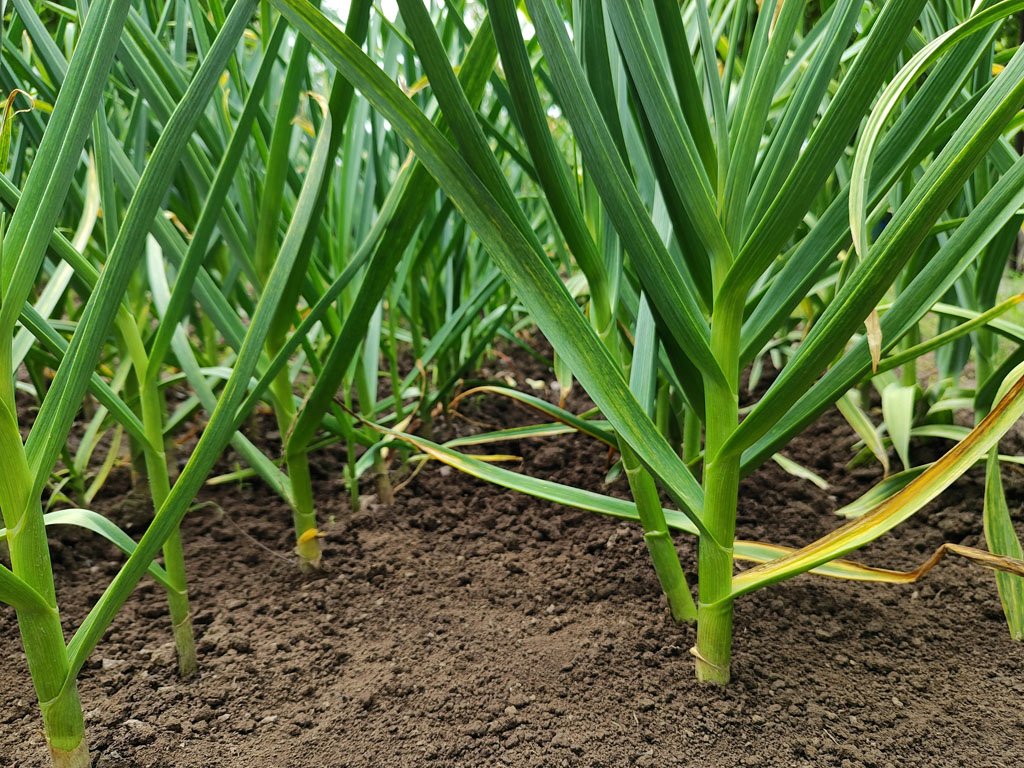
Growing garlic well means starting with well-drained, fertile soil with a pH between 6.0 and 7.0, and giving it a period of cold exposure over winter to form separated cloves. Water thoroughly at planting, then let mulch handle moisture through winter dormancy.
The University of Minnesota Extension provides a detailed regional guide.
Weeding Matters More Than Pest Control
Growing garlic faces remarkably few pest problems, with onion maggot being the most notable occasional concern. Weeds are the bigger threat, since young garlic shoots compete poorly against fast-growing spring weeds, so early and consistent weeding matters more than pest control.
Companion Planting
Garlic pairs well with tomatoes, peppers, and roses when growing garlic near them, since its sulfur compounds help repel aphids. Avoid planting garlic near peas or beans, as it can stunt legume growth.
Can You Grow Garlic in Containers?
Yes. Growing garlic in containers works well as long as the pot is at least 12 inches deep with full sun and winter cold exposure. Containers may need extra insulation in very cold climates since roots are more exposed to freezing than in-ground plantings.
Harvesting
Harvest garlic between late June and late July, once about half the leaves have turned yellow and started to dry. Dig carefully with a garden fork rather than pulling, since bruised bulbs won’t cure or store as well.
Cure freshly harvested garlic in a warm, dry, well-ventilated spot for 2-3 weeks before trimming roots and tops. Properly cured garlic stores for 6-8 months in a cool, dark, dry location.
Why Grow Garlic?
Growing garlic is worth it for the flavor alone. It contains allicin, a sulfur compound formed when cloves are crushed, studied for potential cardiovascular and immune benefits. It’s also a good source of manganese and vitamin B6, and homegrown bulbs offer far more flavor than the imported garlic typically sold in stores.
Common Problems
Small bulbs at harvest |
Weeds and onion maggot |
How long does garlic store?
Weeds and Onion Maggot: Keep beds weeded consistently from early spring on, since garlic competes poorly with weeds. Onion maggot is uncommon but can be reduced with crop rotation.
Small Bulbs at Harvest: Small bulbs usually result from planting too late in fall, overcrowding, or fertilizing too far into spring, which delays the plant’s shift from leaf growth to bulb formation.
How Long Does Garlic Store? Properly cured garlic stores for 6-8 months in a cool, dark, dry location. Softneck varieties generally store longer than hardneck types.
Common Beginner Mistakes
These mistakes come up again and again when growing garlic for the first time:
- Planting grocery store garlic instead of seed garlic.
- Planting too late in fall, leaving too little time for root establishment.
- Skipping mulch, which leaves cloves vulnerable to hard freezes.
- Continuing to fertilize too late into spring.
FAQs
Q: Can I plant grocery store garlic?
A: It’s possible, but grocery garlic is often treated to prevent sprouting; seed garlic performs more reliably when growing garlic at home.
Q: Why are my garlic bulbs small?
A: Small bulbs usually result from late planting, overcrowding, or fertilizing too late in spring.
Q: Can garlic be grown in containers?
A: Yes, in a container at least 12 inches deep with full sun and winter cold exposure.
Q: How long does homegrown garlic store?
A: Properly cured garlic stores 6-8 months in a cool, dry place.
Q: What’s the difference between hardneck and softneck garlic?
A: Hardneck varieties tolerate cold better and have fewer, larger cloves; softneck varieties store longer and are easier to braid.
Best Varieties for Beginners
Choosing the right variety makes growing garlic easier season after season:
Best beginner variety: Music, a hardneck type with large cloves and strong flavor.
Best storage variety: Inchelium Red, a softneck type that lasts longest.
Best cold tolerance: German Extra Hardy.
Best mild flavor: Silverskin softneck varieties.
Best for braiding: California Early White, a classic softneck.
Related Vegetables
If you’re planning a fall planting schedule, check out our guides to growing onions and growing carrots.